Some trips are about distance; others are about rhythm.
In February 2025, Jaume and I left Dakar with two bicycles, a couple of backpacks, and the idea of reaching Cap Skirring, the southern edge of Senegal, by pure human effort. We didn’t plan much — only to ride south, through the green heart of Casamance, and trust that the road would take care of the rest.
The adventure began not on two wheels, but inside an old, rattling bus heading south. The aisles were full of sacks, chickens, and laughter — the kind of chaos that only feels natural in West Africa. Somewhere between Kaolack and the Gambian border, the engine sputtered and died. The heat hit us like a wave, shimmering off the asphalt, and everyone spilled out into the open road. A single baobab tree stood nearby, enormous and silent, so we walked toward it and joined the circle of shade forming underneath.
For three long hours, that tree became our world. We shared water, fruit, and jokes with strangers who didn’t seem bothered at all by the delay. There was no rush here — just the hum of insects and the laughter of people who knew that time, in Africa, has its own logic. When the driver finally got the engine roaring again, a cheer went up under the baobab. It felt like we had already arrived somewhere meaningful.
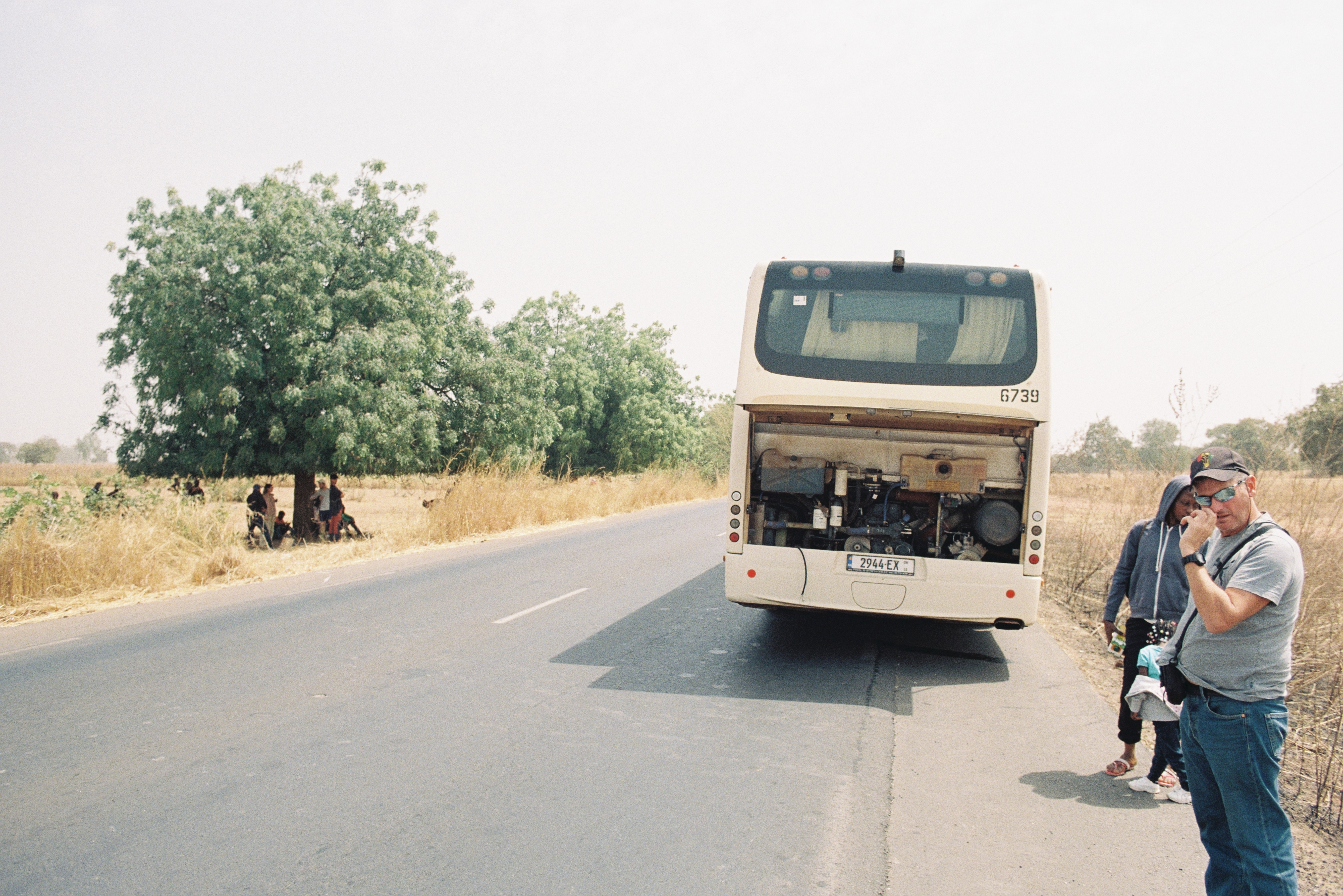
Sheltering under a baobab after our bus broke down under the blazing sun — the adventure started early
By the time we rolled into Bignona, dusk had painted the sky in deep oranges and blues. The town buzzed with the sound of mopeds, radios, and the smell of roasted peanuts. We found two heavy bicycles — dusty, scratched, but sturdy enough for what lay ahead. We loaded our gear, tightened the straps, and promised ourselves we’d start at dawn.
The first morning in the south felt like the real beginning. We pedaled through quiet roads surrounded by cashew trees, the air heavy with the smell of earth and fruit. Kids shouted “Toubab!” as we passed — white man — waving as if we were celebrities. The road wound through villages of red soil and palm groves, where women balanced water buckets on their heads and goats wandered freely. By sunset, the light was low and golden, and our legs had turned to lead. We reached Koubalan, where a small guesthouse offered a meal and a bed that felt like heaven.
The next days blurred into a rhythm — the hum of the tires, the taste of dust, the pauses under baobabs when the sun became too much. Between Koubalan and Séléki, the asphalt gave way to dirt tracks that wound through rice paddies and mango trees. The sound of cicadas filled the air, and the red road shimmered like copper.
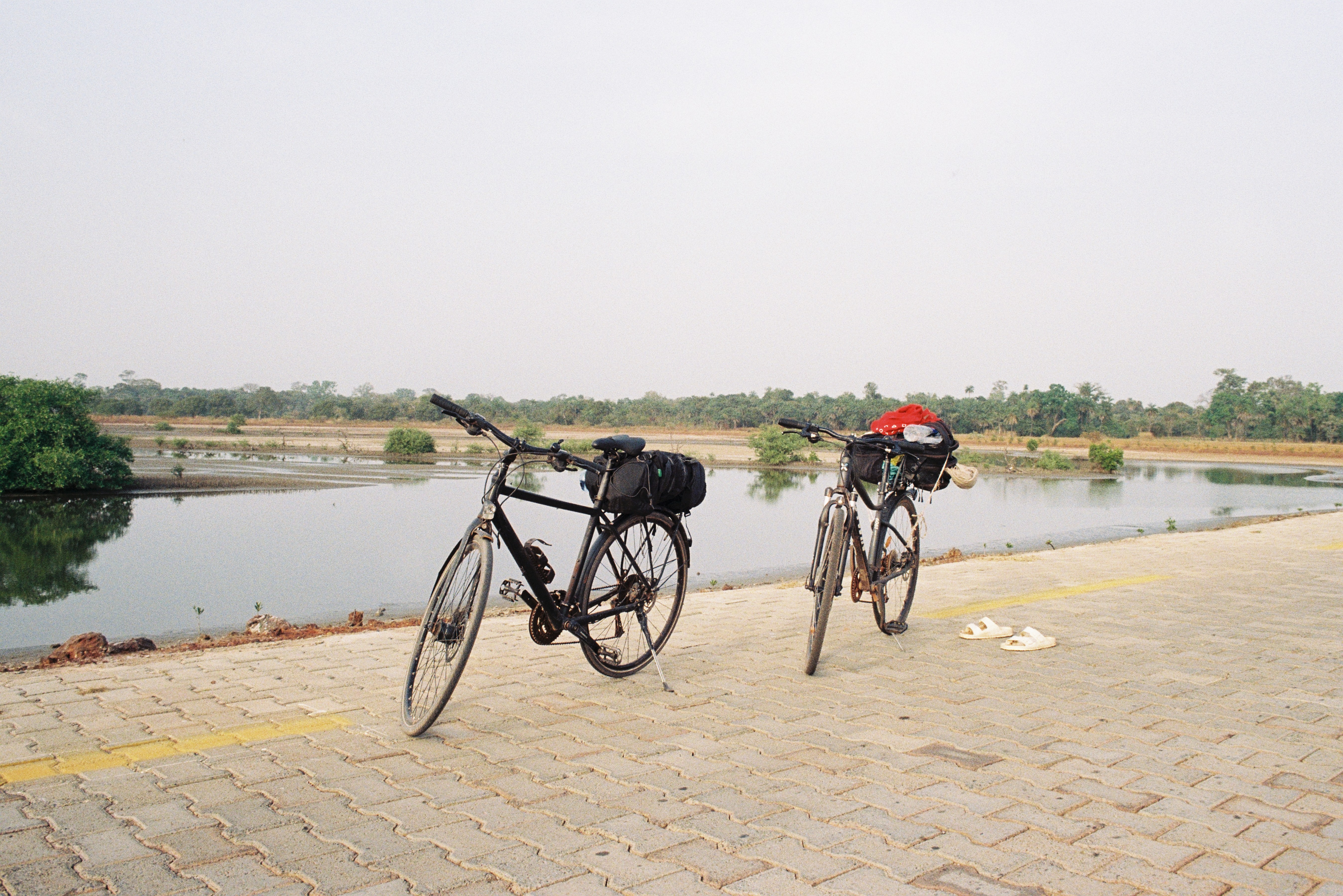
Our bikes packed and ready for adventure, heat and dust.
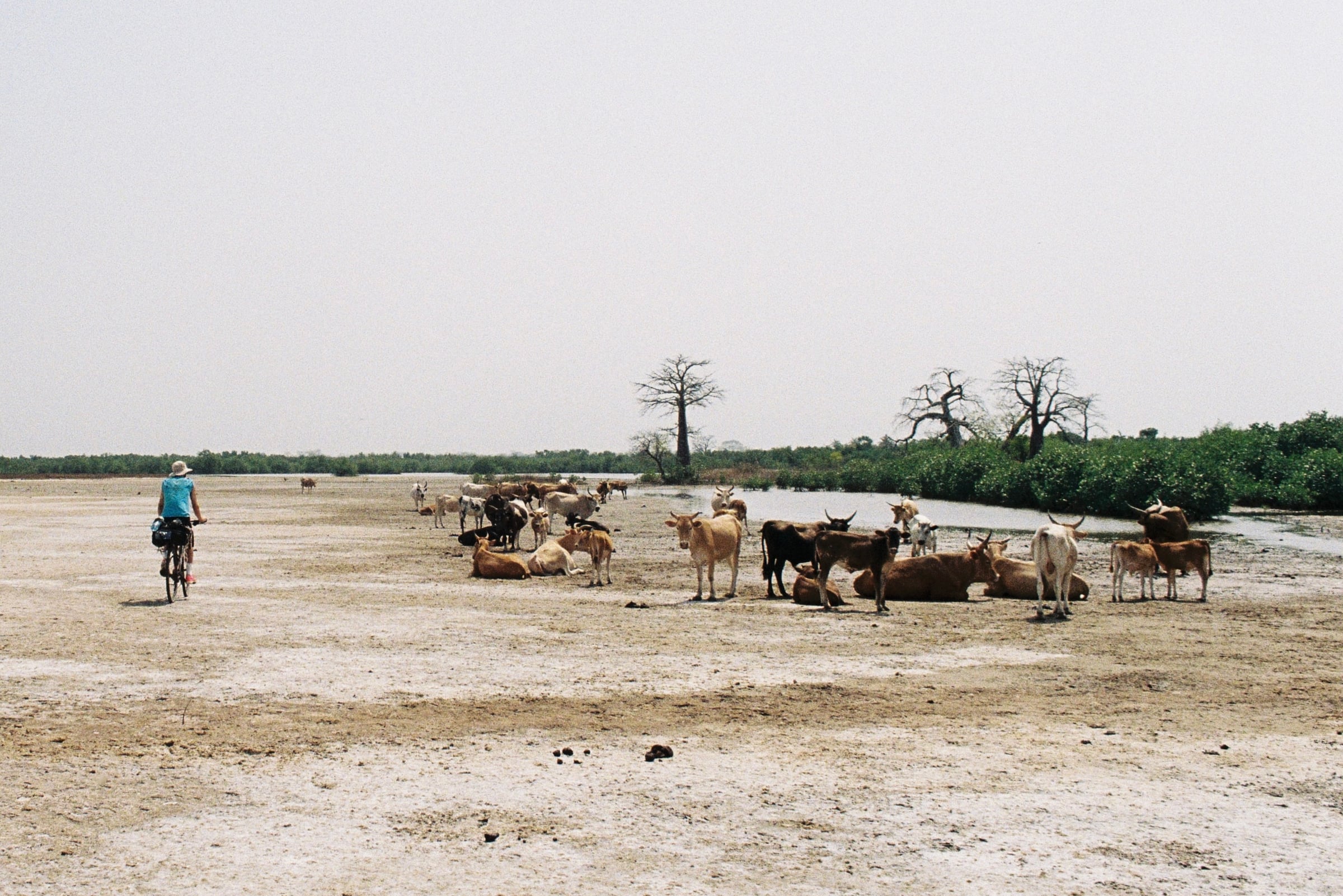
Village path near Séléki, with a few friends and huge baobabs.
We slept lightly, woke early, and rode into the green. As we moved further south, the scent of salt began to mingle with the heat. The landscape softened — palm trees, rivers, and mangroves replacing dry fields. We reached Elinkine, a fishing village where the wooden pirogues floated on silver water and the air smelled of smoke and grilled fish. Men worked on their nets by the river, and children jumped from the docks into the cool current. The place had a quiet rhythm, as if the tide dictated time itself.
To continue, we needed to cross a river. We found a narrow wooden boat and loaded the bikes aboard. The boatman didn’t speak much — just smiled, pushed off, and let the current take us between the mangroves. The water was still, green, and thick with life; it felt like floating through another world.
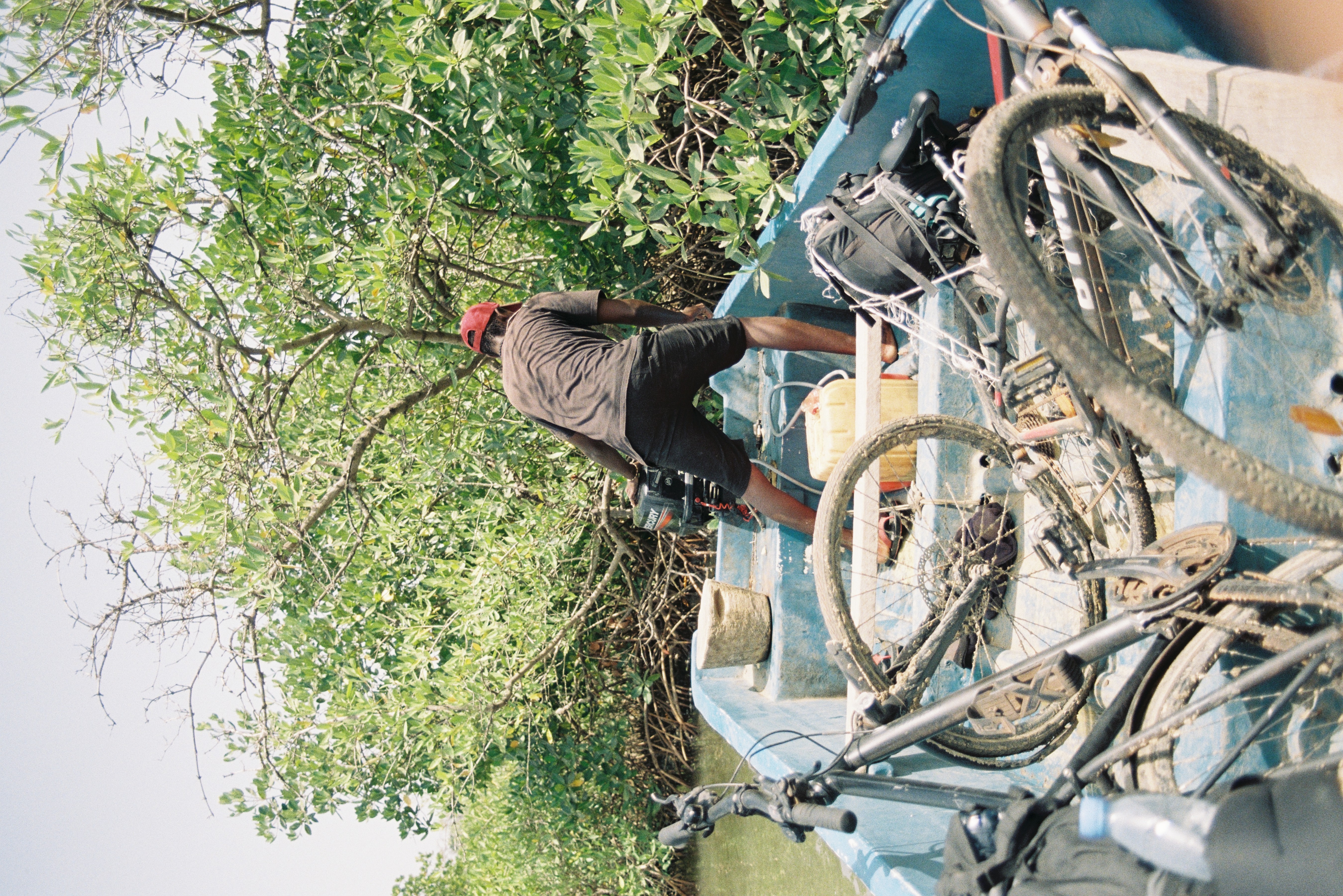
Taking a small shortcut through the Senegal river, from Séléki to Oussouye.
By evening, we reached Oussouye, one of Casamance’s cultural hearts. The road there was shaded and quiet, and the air hummed with crickets. We stayed with a local family, eating rice and fish from a shared bowl, drinking palm wine that burned softly in the throat. The night sky was full of stars and laughter. Someone played a drum. Someone else told stories that mixed truth and myth. For a while, the world felt perfectly still.
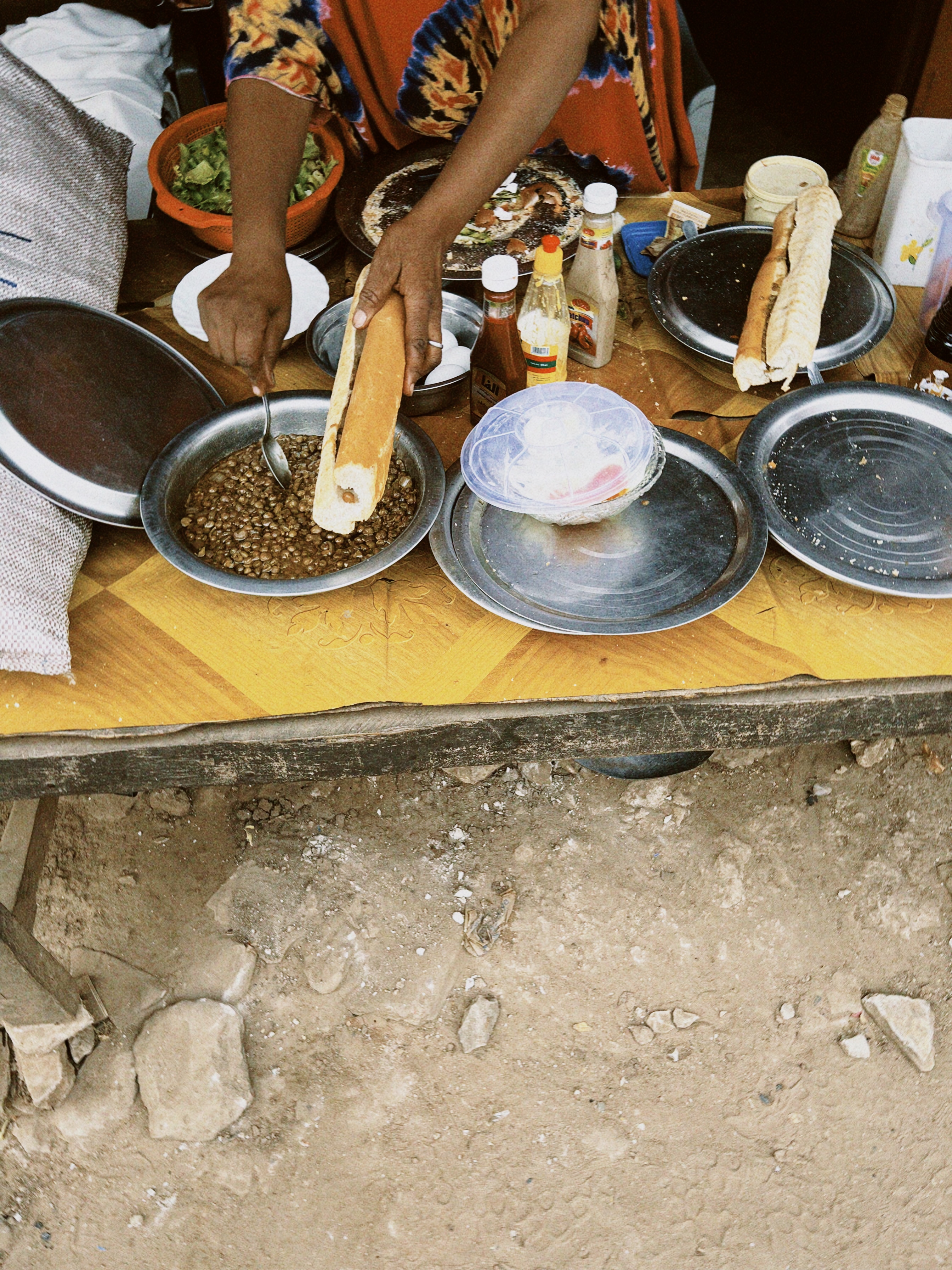
Our breakfast of choice, a baguette with petit pois, boiled eggs, and mayo.
The next day we took a detour to Loudia Ouolof, riding through fields of rice and palm groves, where the air shimmered with heat and distant songs. We stopped for bread and boiled eggs at roadside stalls, watching the slow rhythm of village life — people carrying firewood, laughing, waving, moving in sync with the sun. Maps didn’t matter anymore. The road knew where it was going.
By the time we turned west toward the coast, the air had changed again. It smelled of the sea — that unmistakable, electric scent of salt and distance. The road from Oussouye to Cap Skirring felt endless, flat, and bright. The ocean was somewhere ahead, invisible but pulling us closer.
Just a couple of kilometers before the end, Jaume’s tire gave up with a sharp hiss. He laughed, then groaned, then laughed again, sweat pouring down his face. There was nothing to do but push the bike the rest of the way. The sound of waves grew louder with each step until the land simply ended — and there it was. The Atlantic. Wide, wild, infinite.
We dropped the bikes and jaume ran straight into the surf. Six days of dust, heat, and road washed away in an instant.
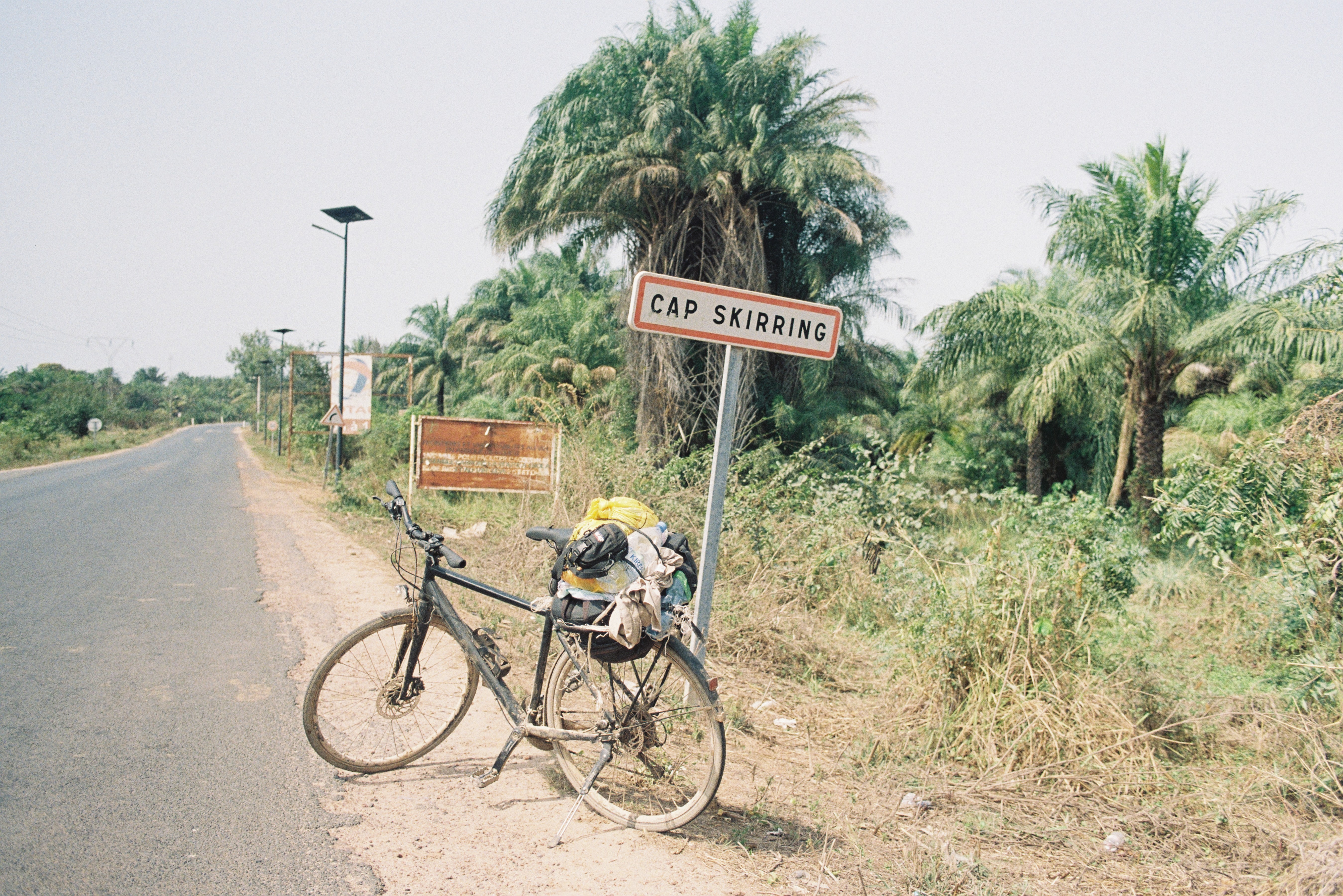
Arriving at Cap Skirring after six days of cycling.
We stayed by the ocean for two more days. There was no plan, no urgency. Just long swims, seafood grilled over open fires, and sunsets that stretched forever. The rhythm of Casamance had seeped into us — slow, grounded, timeless.
When it was finally time to leave, we realized that the journey had never been about reaching the sea. It was about the movement itself — the red roads, the laughter under the baobabs, the kindness of strangers, and the endless patience of the land. Even Jaume’s punctured tire, in the end, felt like a gift — a reminder that sometimes you need to walk the last stretch to really arrive.
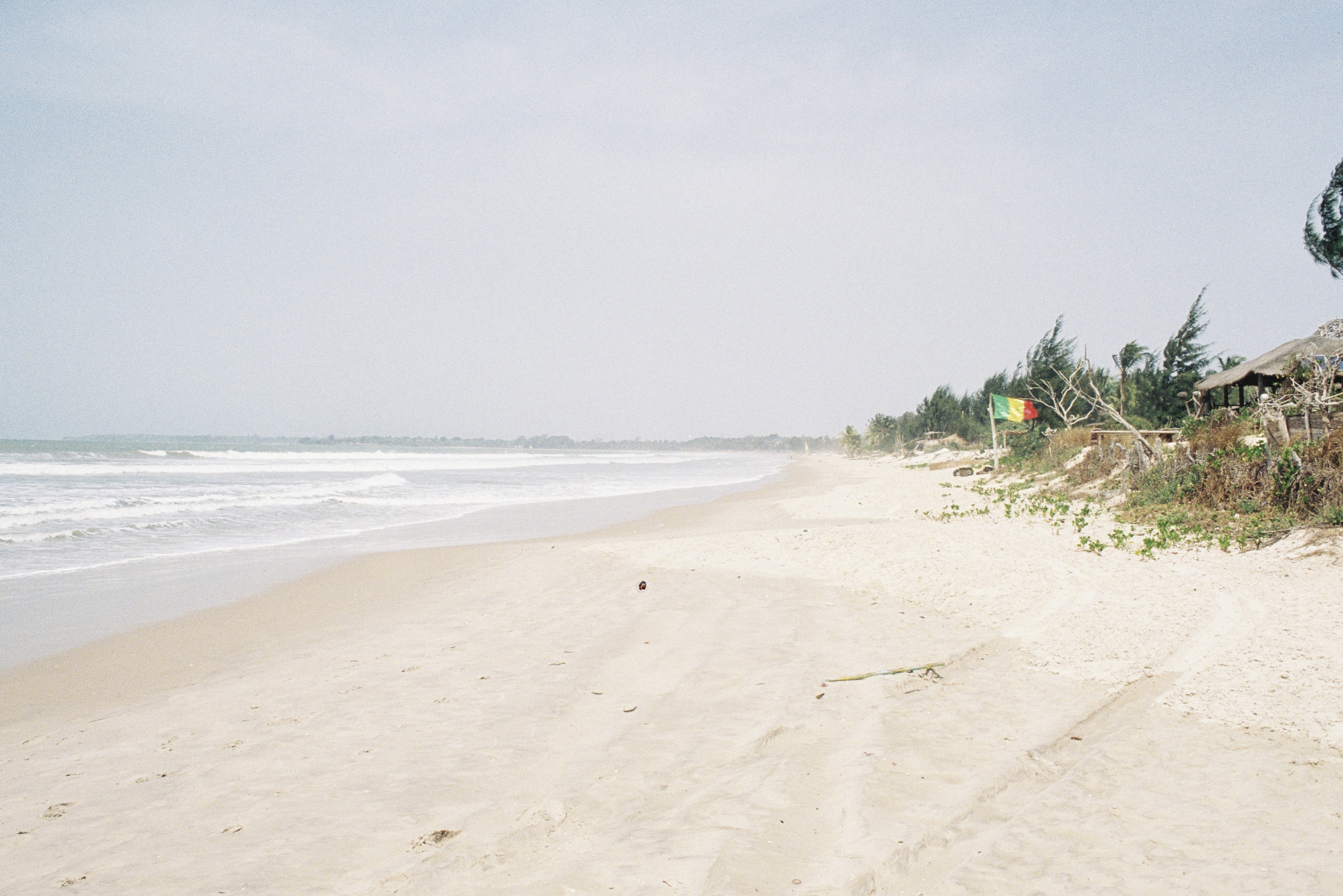
The Atlantic at last, with immense beaches and more soft sand.
Six days, two bicycles, one flat tire, and a thousand small moments that linger — Casamance doesn’t just take you somewhere, it changes the way you move through the world.