It began with backpacks that were supposed to weigh three kilograms.
They didn’t. Cameras, lenses, tripods — the essentials of four friends who wanted to travel light but couldn’t resist the call of photography. We flew with long layovers in Istanbul, sleeping in chairs between strangers and flickering flight screens, half dreaming of dunes and dry light.
When we landed in Muscat on February 28th, 2025, the first day of Ramadan, the city felt suspended in time. The air was hot and still; the streets, hushed. The smell of dust and incense lingered in the morning sun. We picked up our rental — a brand-new V6 Nissan Patrol, spotless, white, humming with quiet power. We didn’t know it yet, but that car would carry us through everything: sandstorms, cliffs, silence, and the kind of vastness you can’t photograph, only feel.
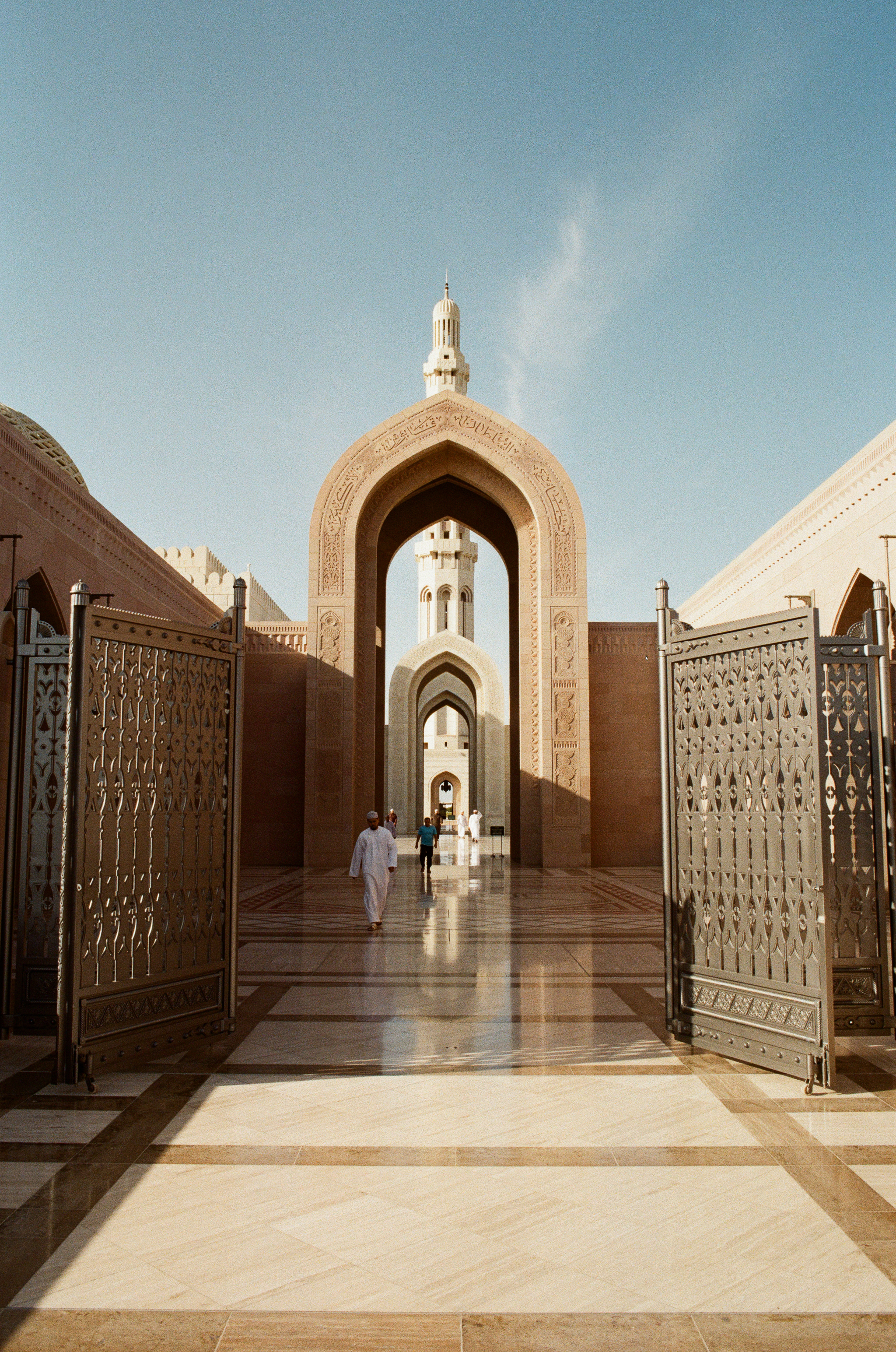
Entrance of Sultan Qaboos Grand Mosque, one of the capital's attractions.
We left the city behind and climbed into the mountains. The asphalt ribboned upwards, and Oman began to reveal itself — red cliffs, soft light, and villages carved from stone. That first sunset burned across the ridges like fire, and for a long time, none of us spoke. It was our first real photograph, not with cameras, but with eyes still adjusting to how big the world could be.
By nightfall, we were camping under stars so sharp they felt close enough to touch. The desert was silent except for the crackle of the fire and the slow ticking of the Patrol’s cooling engine. Someone poured tea. Someone set up a tripod. Someone else said nothing, just stared into the dark.
That was how Oman began — in stillness, under a sky heavy with stars.
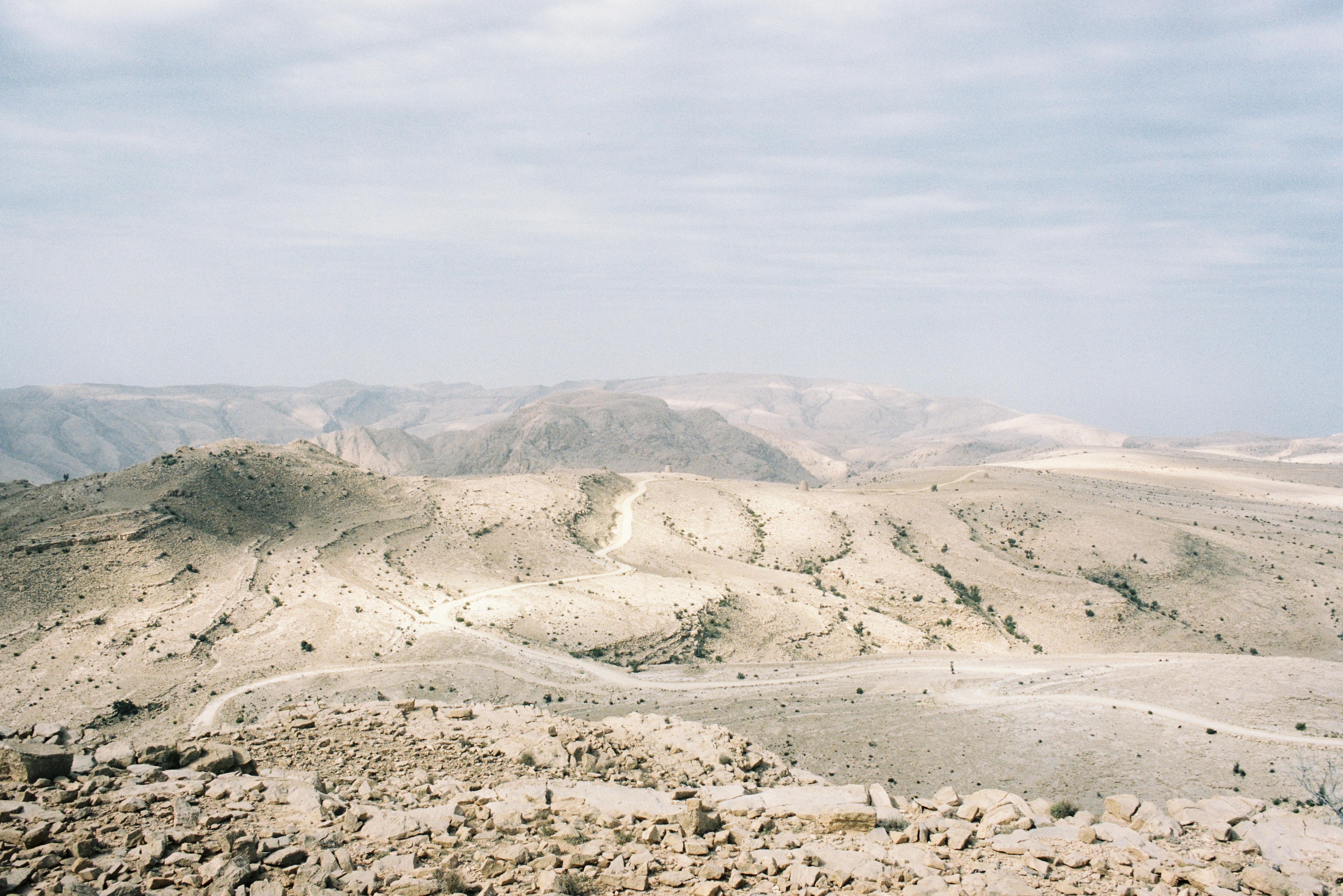
The Al Hajar Ash Sharqi mountain range.
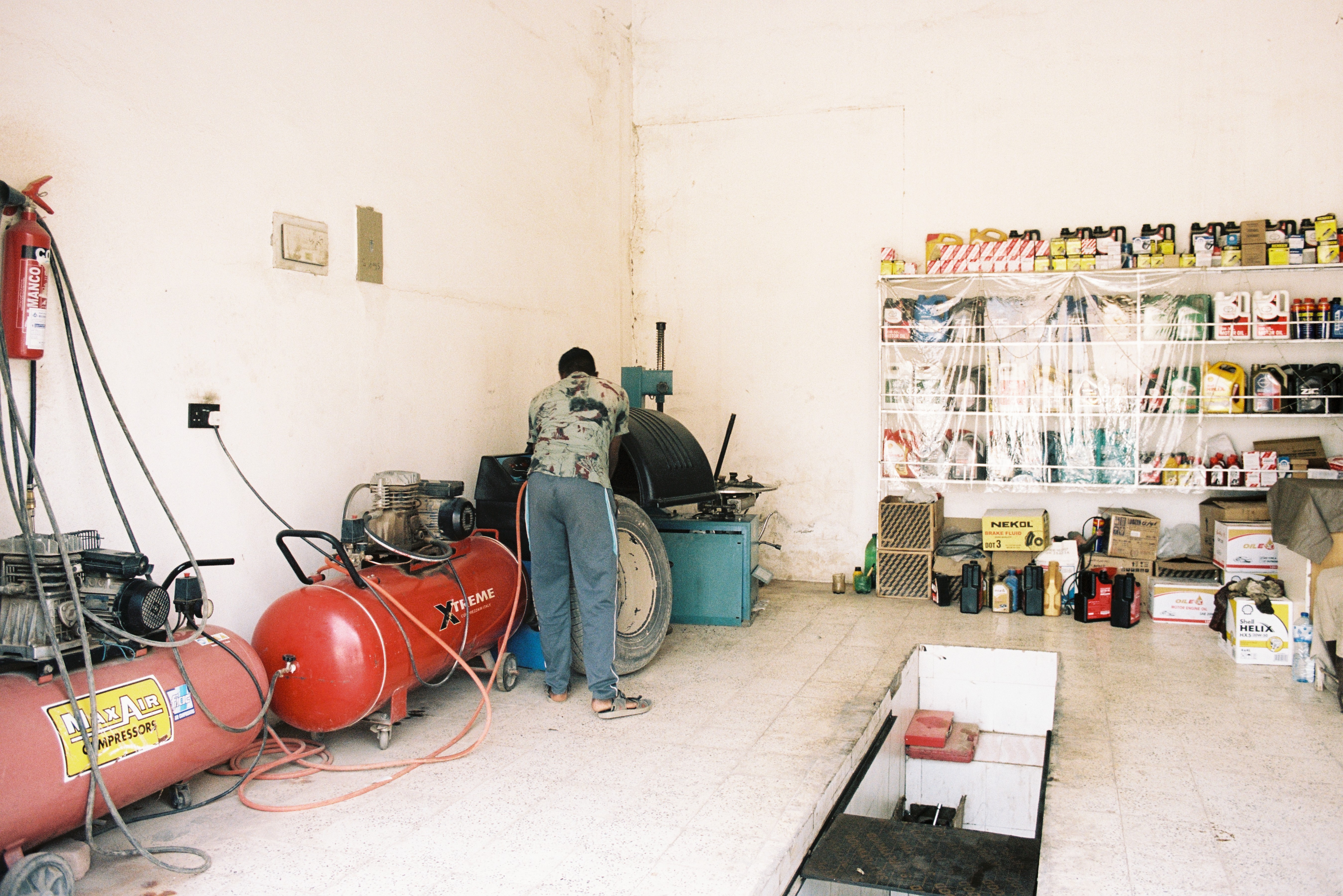
Reparing a flat tire right after crossing Al Hajar Ash Sharqi.
The next days blurred into rhythm: drive, photograph, drive again.
The road to the Wahiba Sands felt endless, cutting through plains of crushed rock and thorn bushes. We dropped the tire pressure, turned off the tarmac, and drove straight into gold.
The dunes rose around us, wave after wave of perfect silence. The Patrol moved like it was born for this — strong, calm, unstoppable. Every crest opened into a horizon of nothingness, every descent a rush of adrenaline and laughter. When the sun fell, the light turned syrupy and thick, and our shadows stretched long and thin over the sand.
We camped in the heart of the desert, no lights for miles, only the soft hum of the wind over the dunes. The fire crackled, sparks drifting upward like stars. We took long exposures of the Milky Way until our fingers went numb from the night cold. It was the kind of silence that seeps into your bones, that makes you feel both infinite and small.
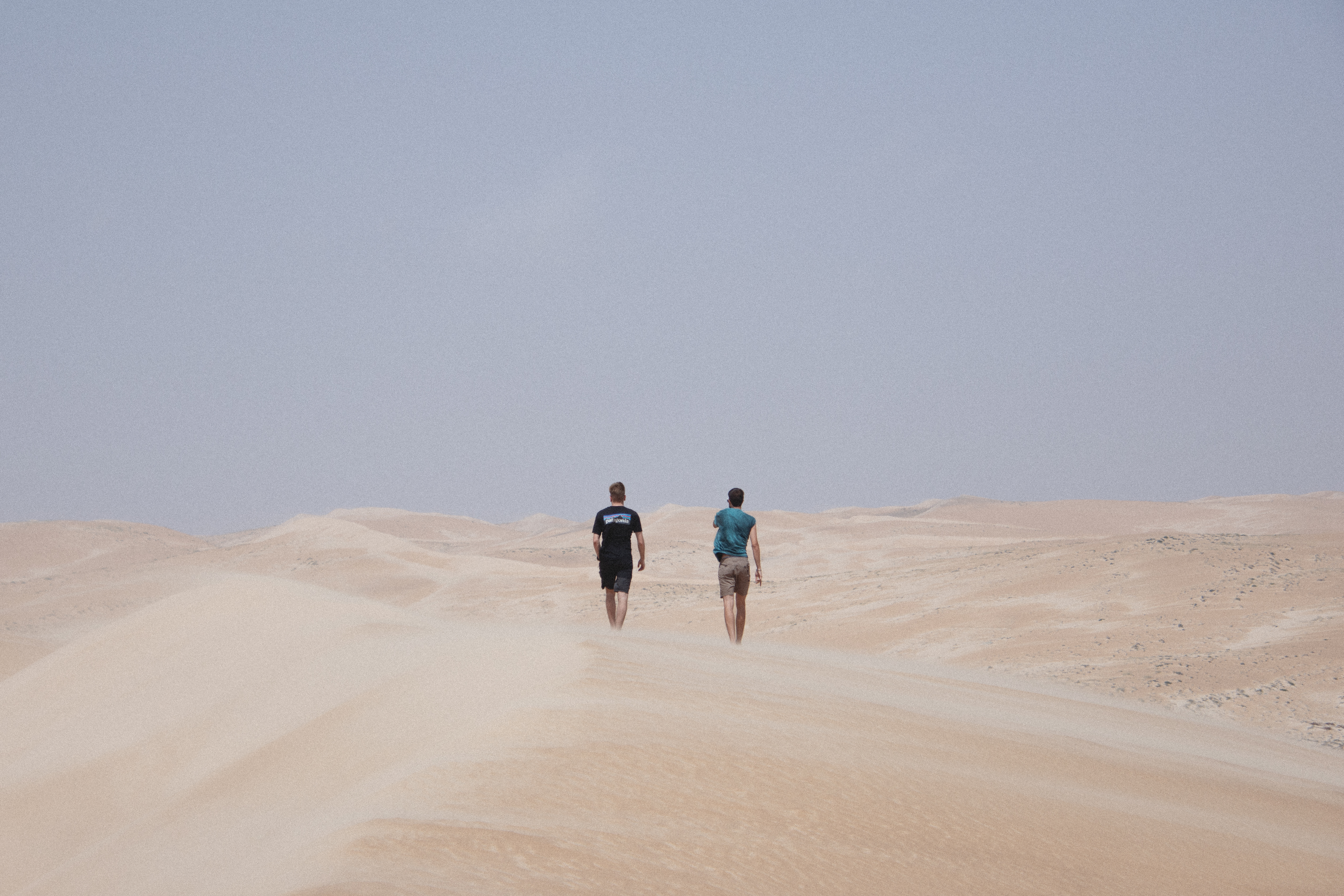
Checking the drivability of the dunes.
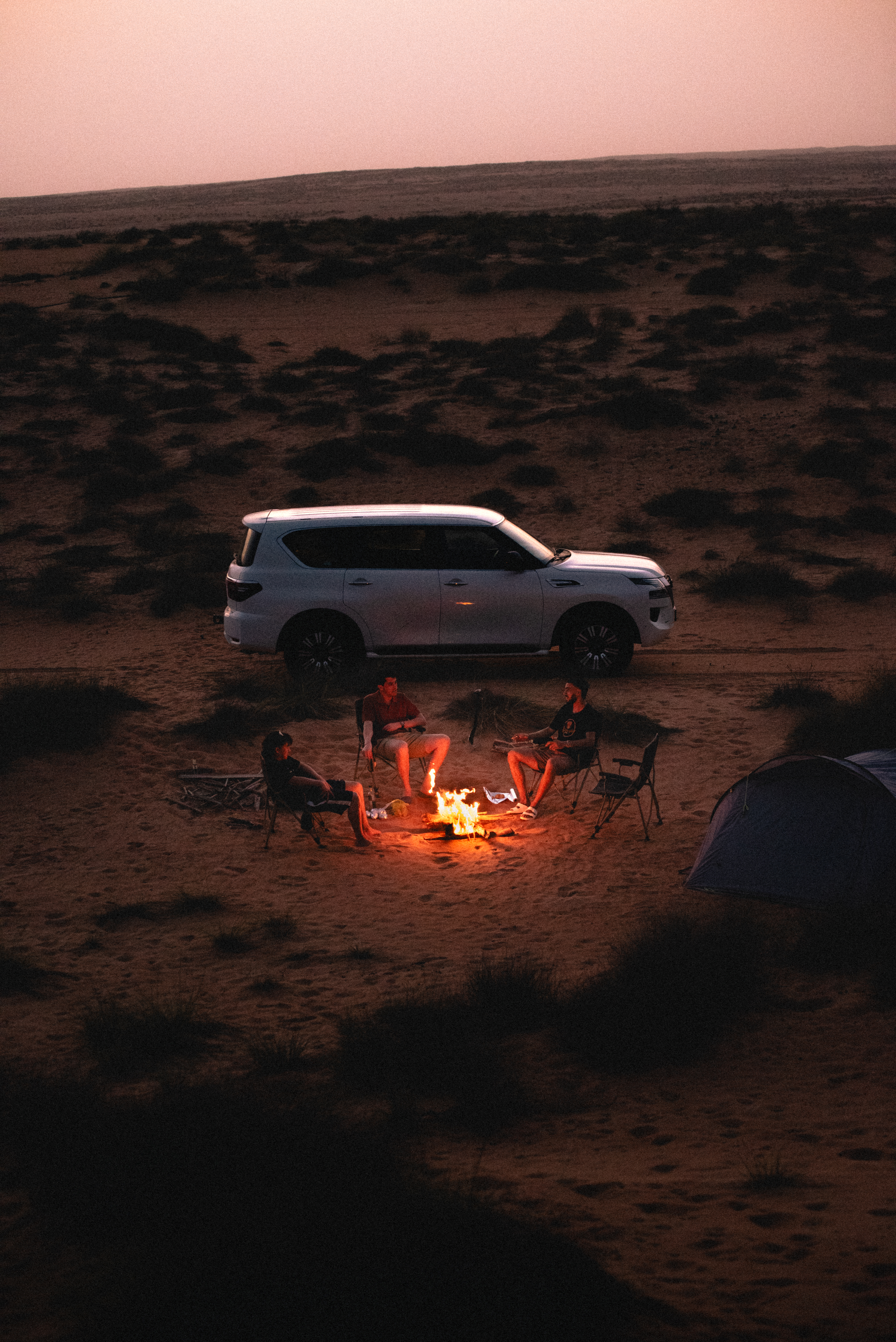
A campfire half way through the Wahiba Sands.
When dawn came, the sand had shifted. Our tracks were gone, erased overnight. It felt like a dream had swallowed us and spit us back into the waking world.
From the sands, we headed east to the coast, chasing the sound of the sea. The ferry to Masirah Island was slow and quiet — seagulls tracing the waves as the mainland disappeared behind a shimmer of heat. Masirah was wild, windswept, and empty. Long beaches with no footprints, salt crusted on our skin, and the soft rhythm of waves against coral-colored rocks.
We built another fire, cooked on the sand, and photographed until the sky bled orange into blue. The light on Masirah was softer, the kind that forgives — like the sea itself, erasing everything you leave behind.
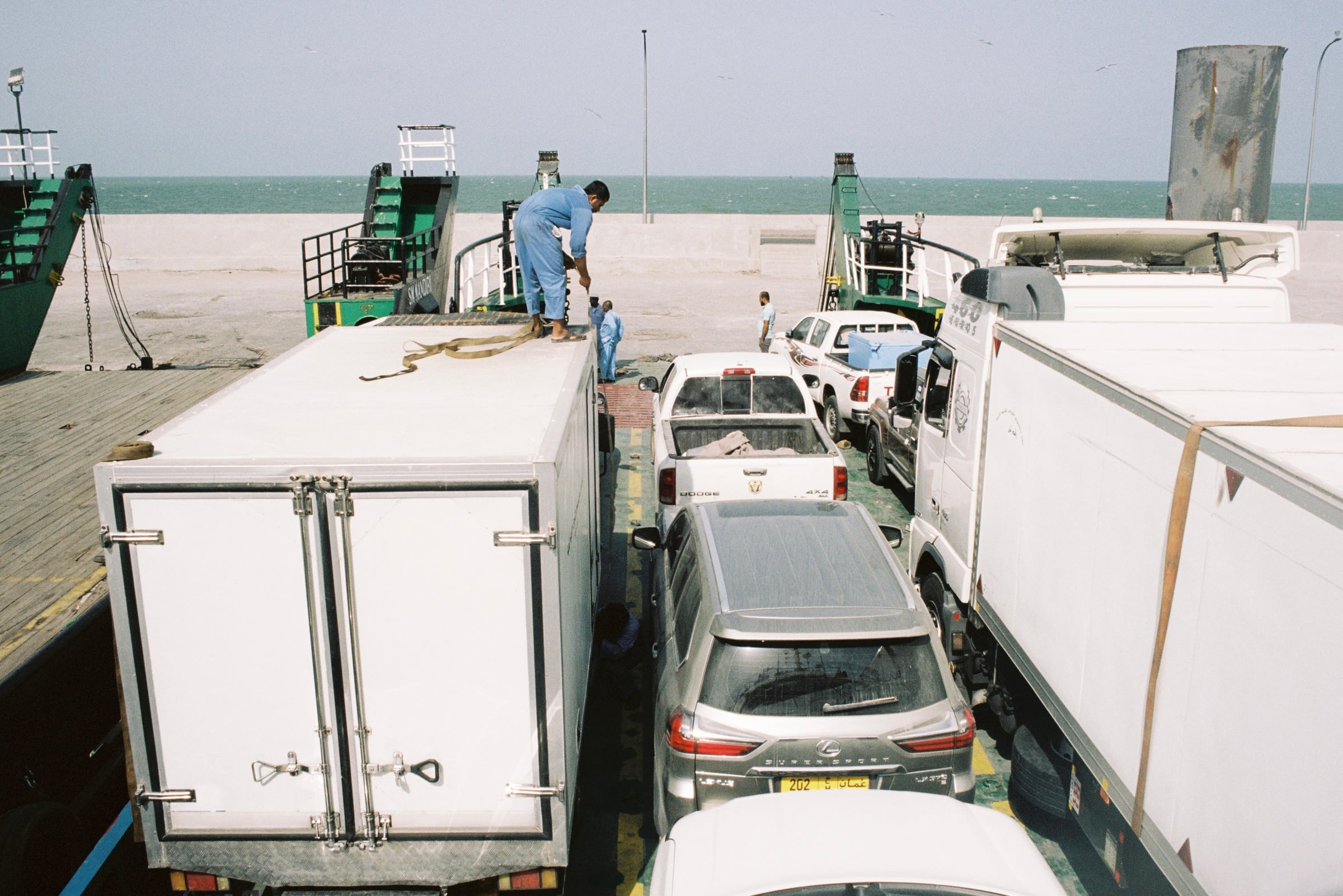
Workers getting the vehicles secured on the ferry to Masirah Island.
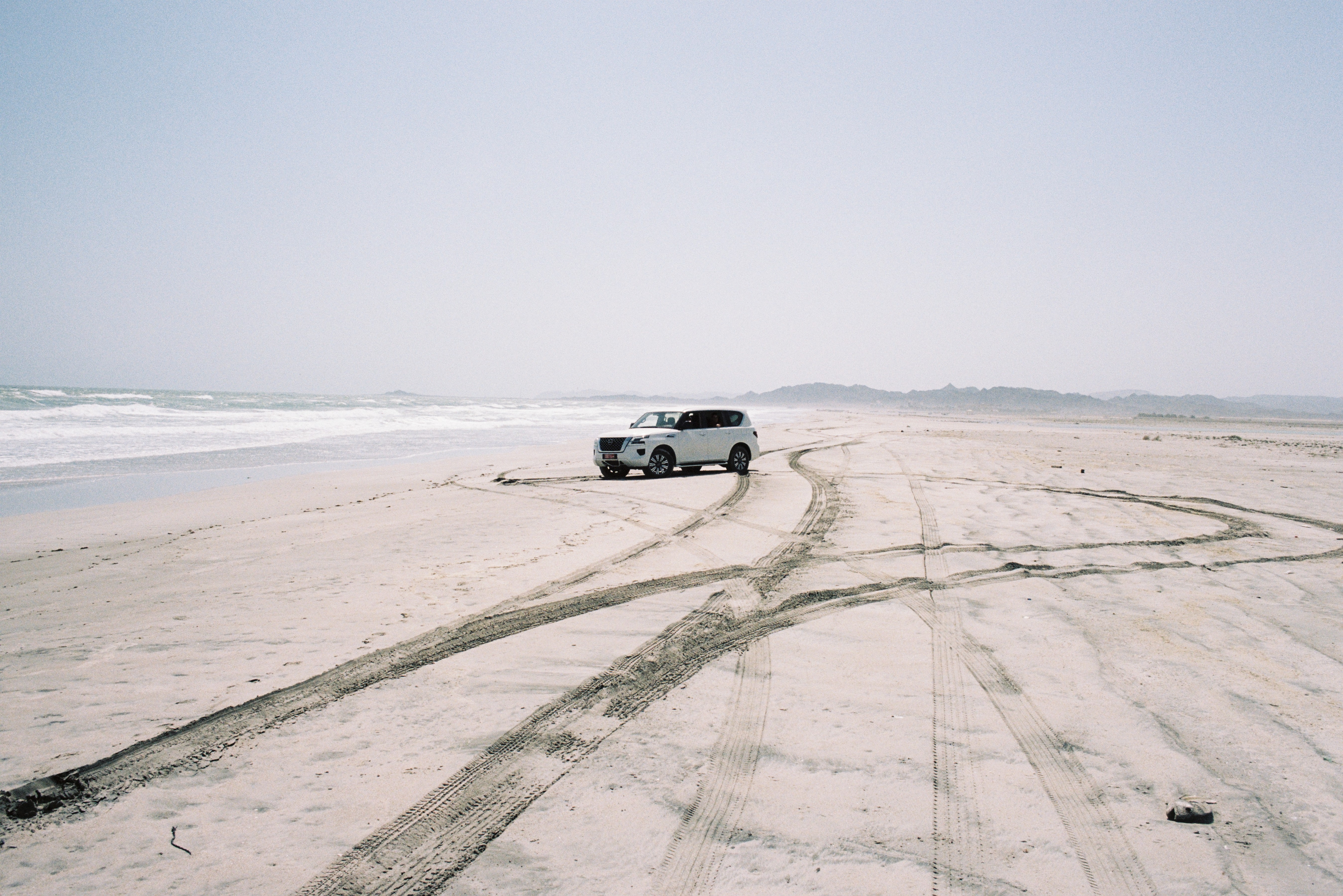
Masirah — the ocean after the desert’s silence
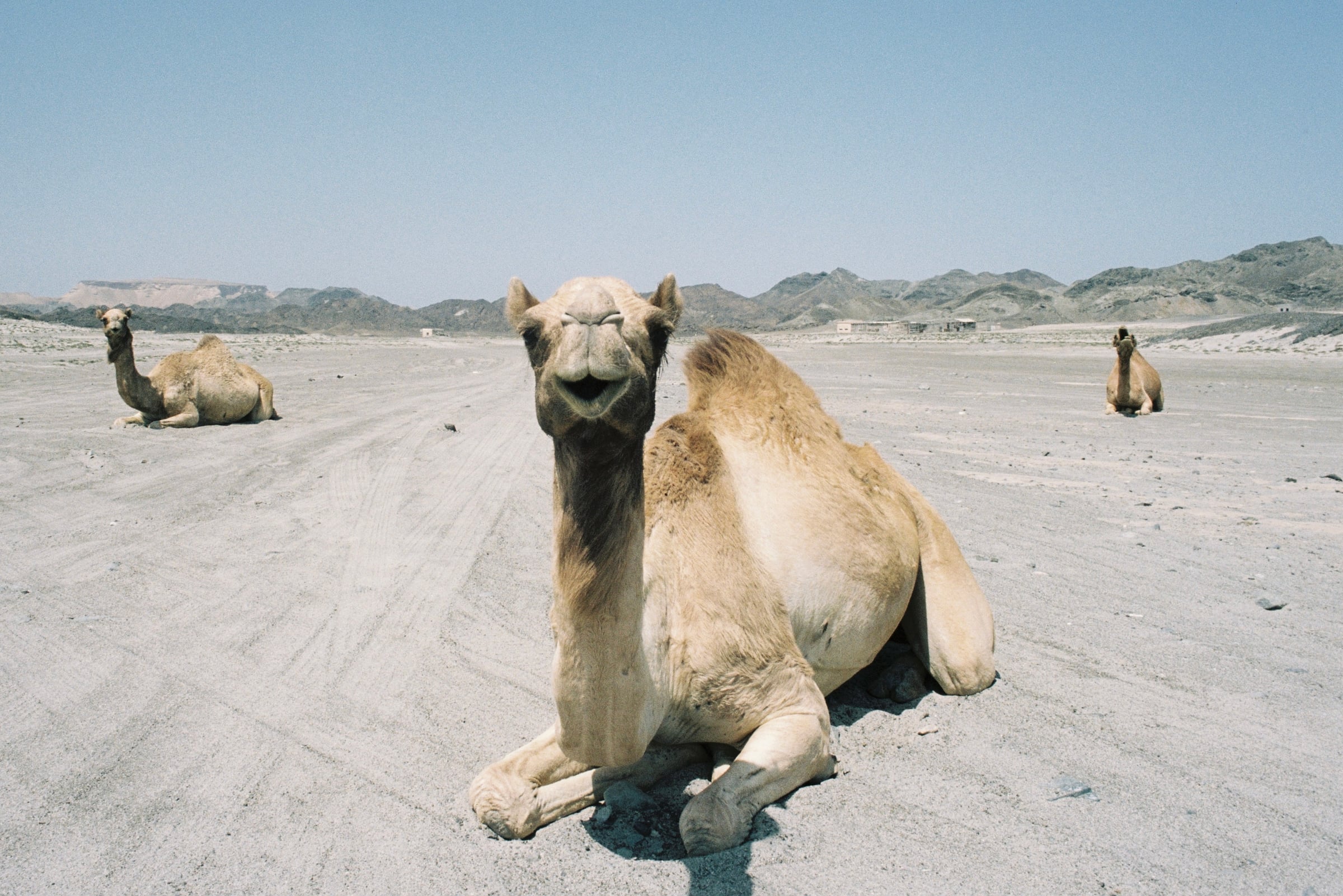
Some friendly camels chilling by the beach.
From there, we followed the lonely coastal road to the Sugar Dunes, where the desert rolls straight into the sea.
It was like driving through a dream. The sand turned white, and the air shimmered with light so pure it looked almost cold. We set up camp between the dunes, where the ocean whispered just meters away. The Patrol stood beside us, half-buried in fine dust, looking as proud as a ship at anchor.
That night, we photographed reflections of stars in wet sand, each wave stealing our footprints. It was impossible to tell where the sky ended and the earth began.
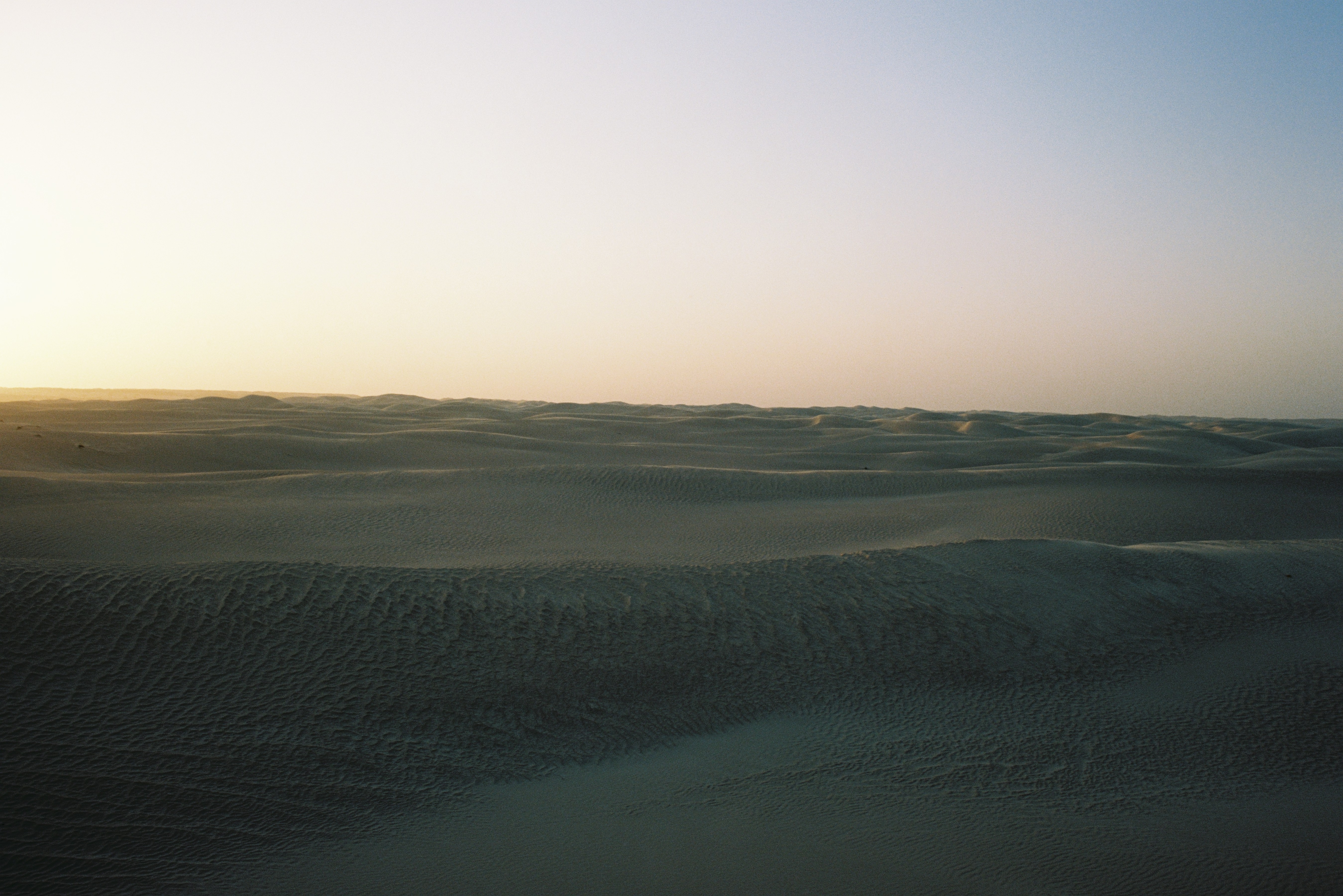
Sugar Dunes stunning white dunes at sunset.
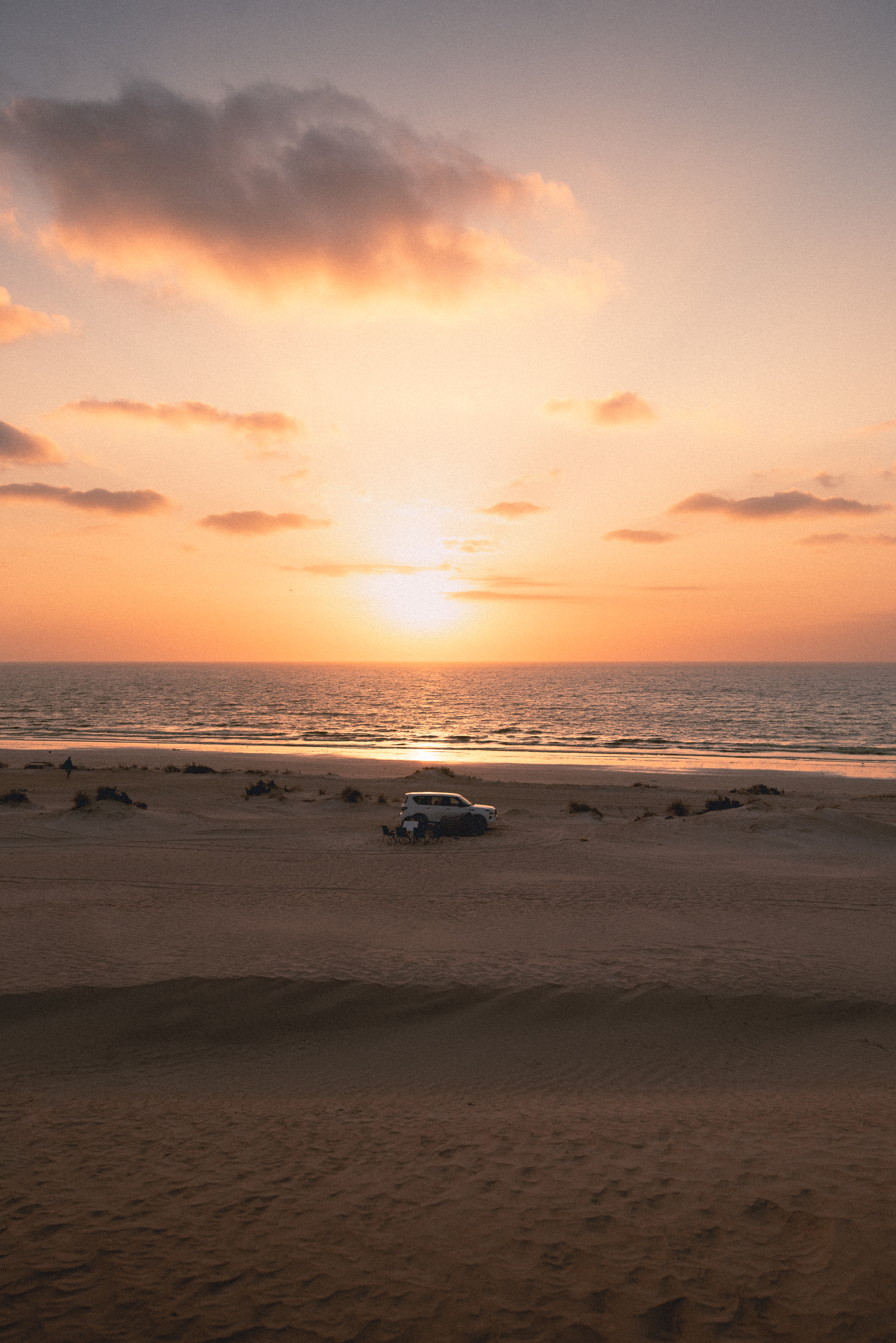
Sunrise view of our campspot in the Sugar Dunes, clear, windy and a bit chilly.
The land changed again as we turned inland, trading the coast for palm groves and fortresses. Nizwa rose from the plain like something out of legend — clay walls glowing under the afternoon sun, the smell of cardamom and dust. We wandered through the souk, photographing faces and spices, watching life return after the long fasting hours of Ramadan.
Oman was movement, contrast, rhythm. Desert to sea, sea to mountain, silence to song.
We spent the next days chasing water — swimming in the turquoise pools of Wadi Tanuf and Wadi Damm, where light danced across canyon walls.
Everywhere we stopped, someone said, “Let’s take just one more photo.” But there was never just one more. The light kept changing. The water shimmered differently with each minute. You learn, in Oman, that photography isn’t about taking something — it’s about not missing it.
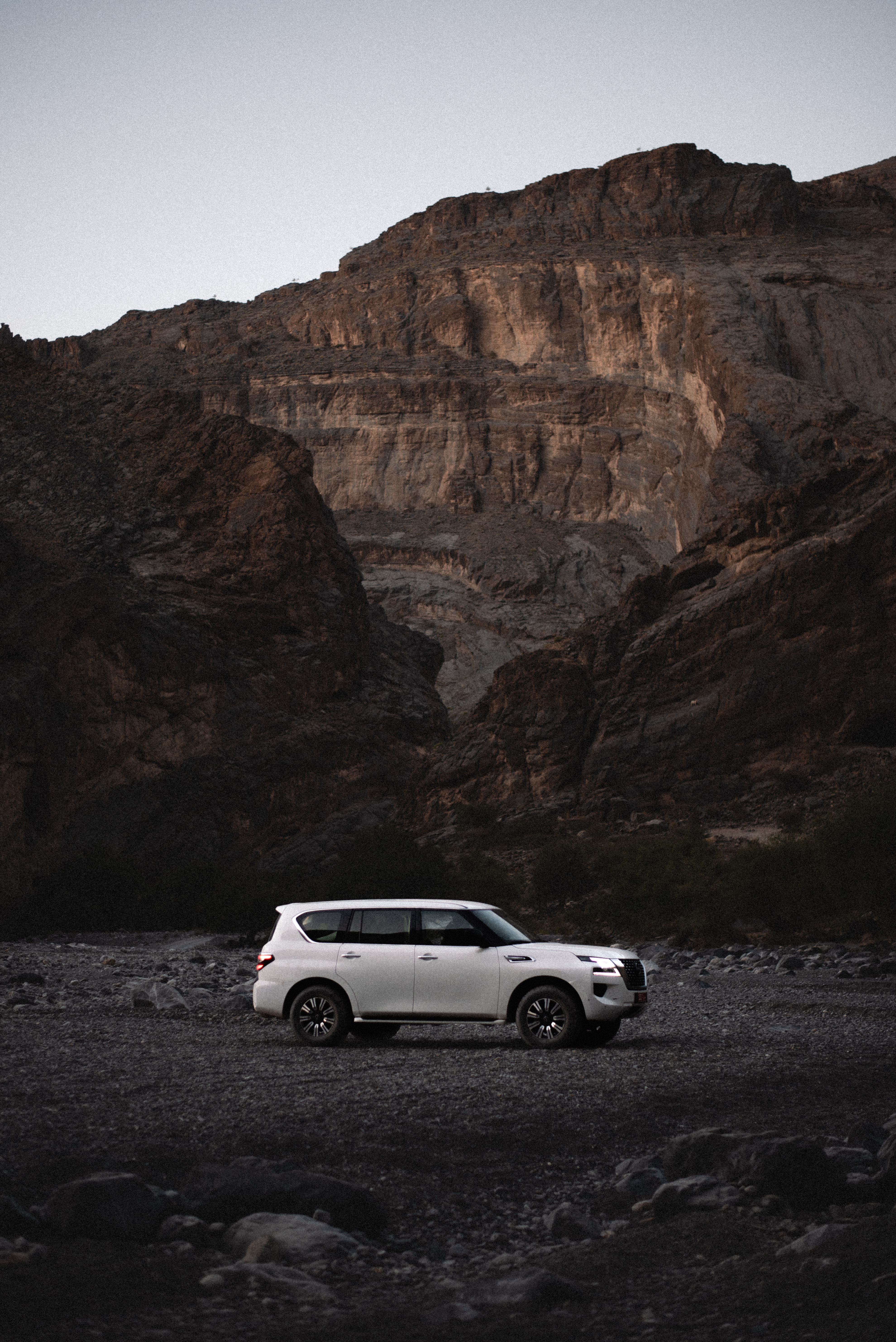
Dry season at Wadi Tanuf.
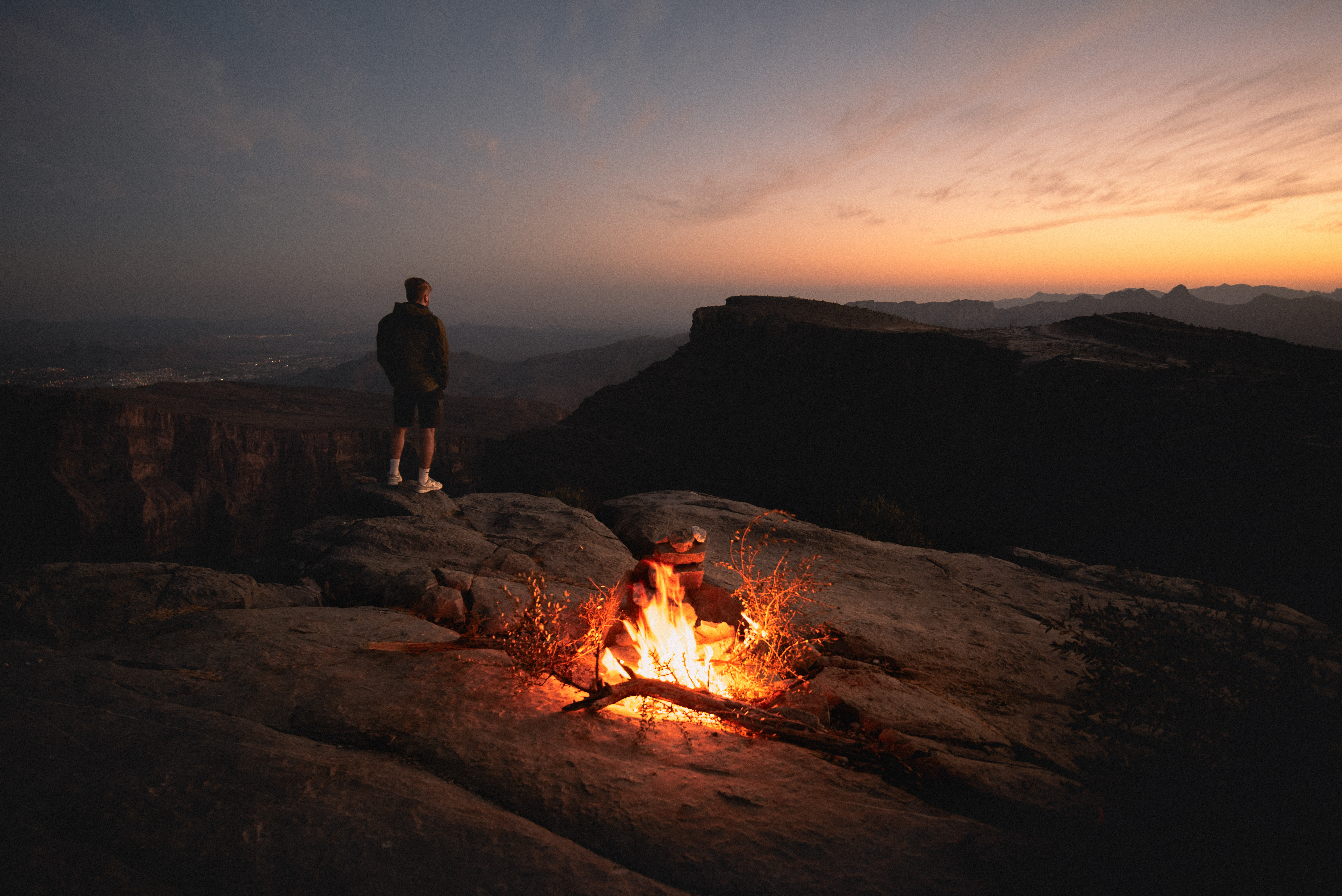
Campfire at Jebel Shams at sunset.
The road climbed higher, into the Hajar Mountains, until the air thinned and the land opened into the immense scar of Jebel Shams — Oman’s “Mountain of the Sun.” Standing on the edge of the canyon, the wind roaring past, we felt the same mix of awe and insignificance we’d felt in Wahiba. You look down and realize that everything you’ve seen, every road, every dune, every fire — it all fits inside this silence.
By the time we descended through Wadi Bani Awf, the Patrol was caked in dust, our faces sunburnt, our memory cards overflowing.
Every night, campfire smoke clung to our clothes; every morning, light filled the lens like a secret you can’t quite capture.
When we finally rolled back into Muscat, twelve days after we’d begun, the car was no longer new. It was scratched, sandy, and proud — a journal written in dust.
We were too.
We returned it quietly, watched it drive away, and stood there for a while, hands in pockets, unsure of what to say. Oman had changed something in us — something we couldn’t photograph.
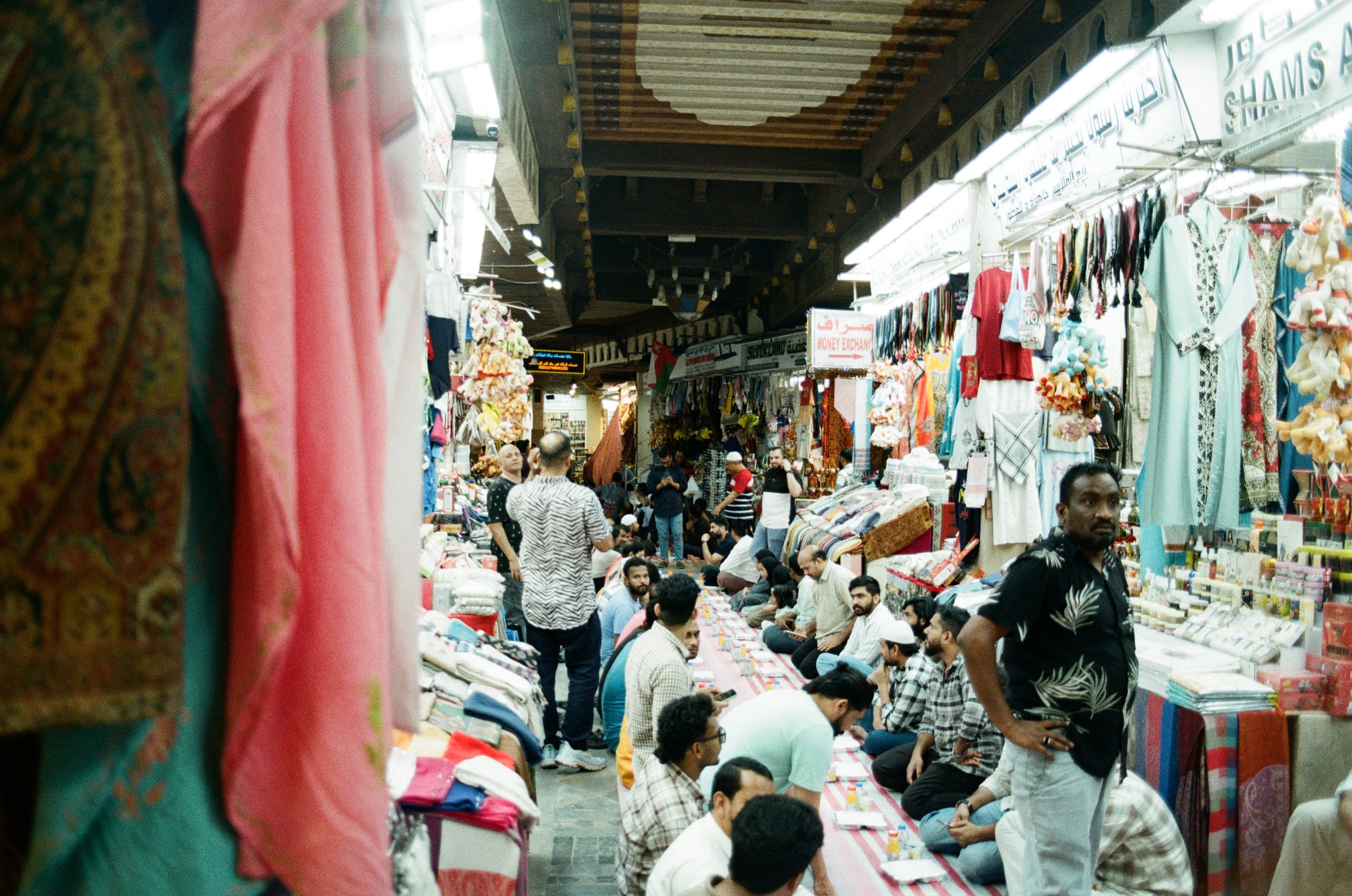
Iftar dinner for the workers of Mutrah Souq.
We came for landscapes and left with silence.
We came for photos and left with moments too wide for any frame.