There are journeys that start as simple plans and end up becoming stories you’ll tell for a lifetime.
This was one of them — six friends, a car overflowing with backpacks and snacks, and a restless pull toward the north. We left Stockholm at noon on June 5th, the sky bright and the air filled with early-summer promise. The plan was audacious: drive through the night, across Sweden’s spine, all the way to Bodø — the last city before the sea and the Lofoten Islands.
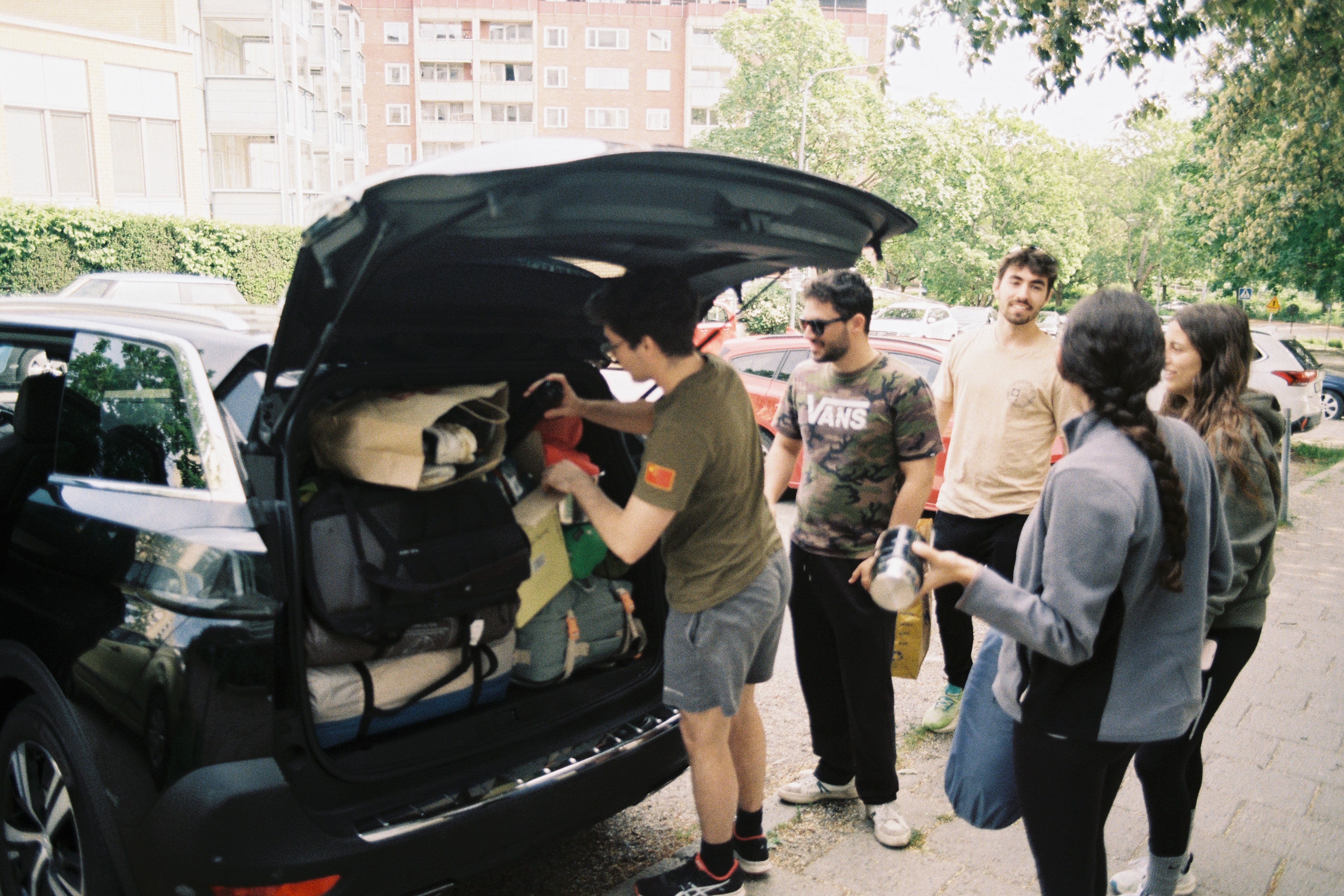
Leaving Stockholm — six friends, one car, and thousands of kilometers ahead
The highway stretched endlessly ahead, cutting through pine forests and mirror-like lakes that reflected the sky in perfect stillness. Between bursts of laughter, too much coffee, and the evolving soundtrack of our trip, the miles disappeared beneath the tires. Somewhere along the way, silence began to feel like a friend — the kind of quiet that only long road trips can bring.
As night fell, something strange happened: the sun refused to set. We crossed into the land of the midnight sun, where dusk melted into dawn, and the horizon burned gold at 2 a.m. Driving through that endless light felt like traveling outside of time — as if the world had paused to let us pass.
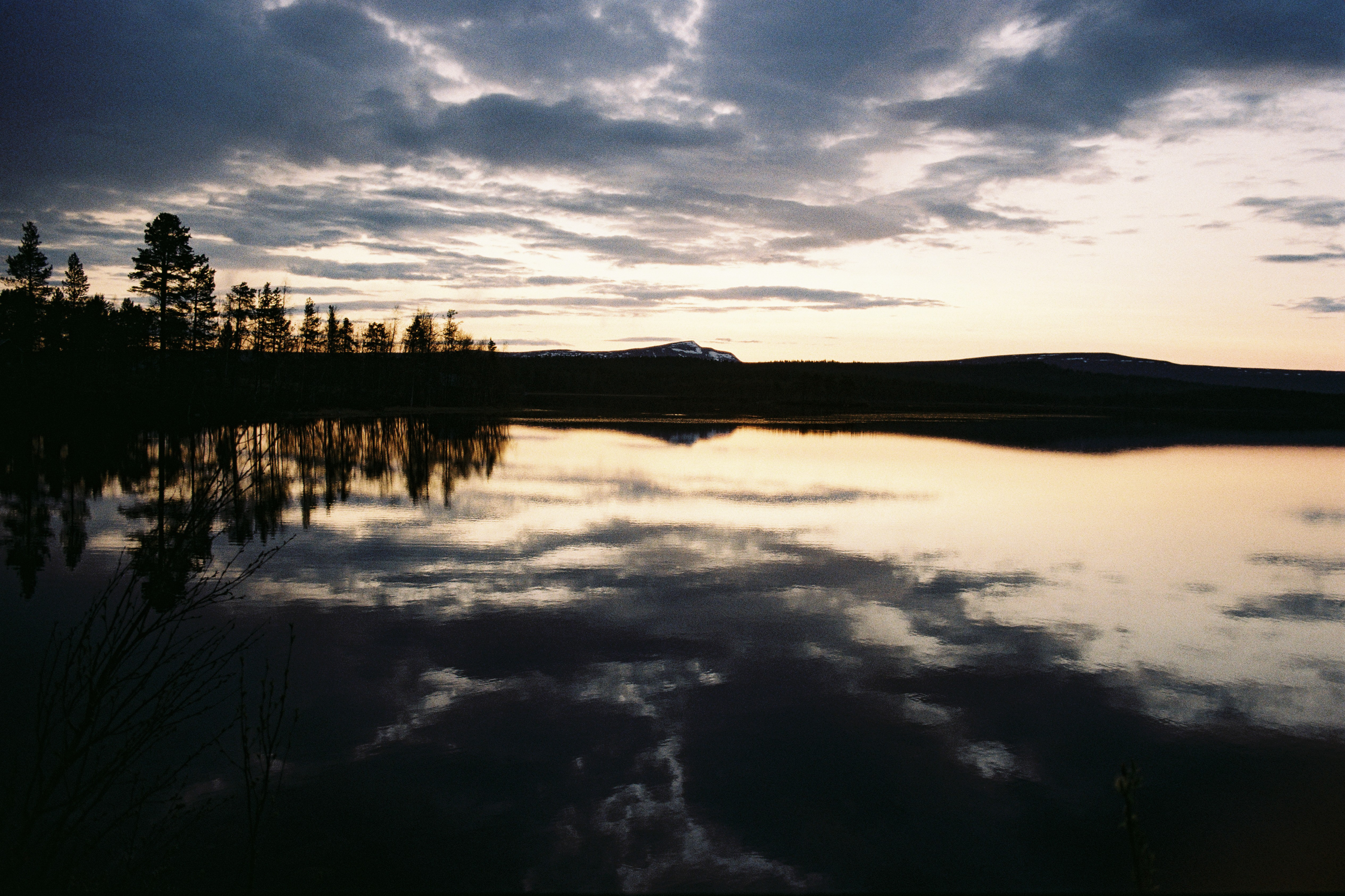
Driving under the midnight sun — a magical feeling only the far north can offer
By the time we reached Bodø, at 5:30 a.m. on June 6th, fatigue and excitement mixed in equal measure. The sea shimmered under pastel skies, and the city was quiet — just gulls, fishermen, and the slow rhythm of the waves. We sat by the harbor eating breakfast, our car dusty, our eyes heavy, waiting for the ferry that would carry us beyond the mainland and into something wilder.
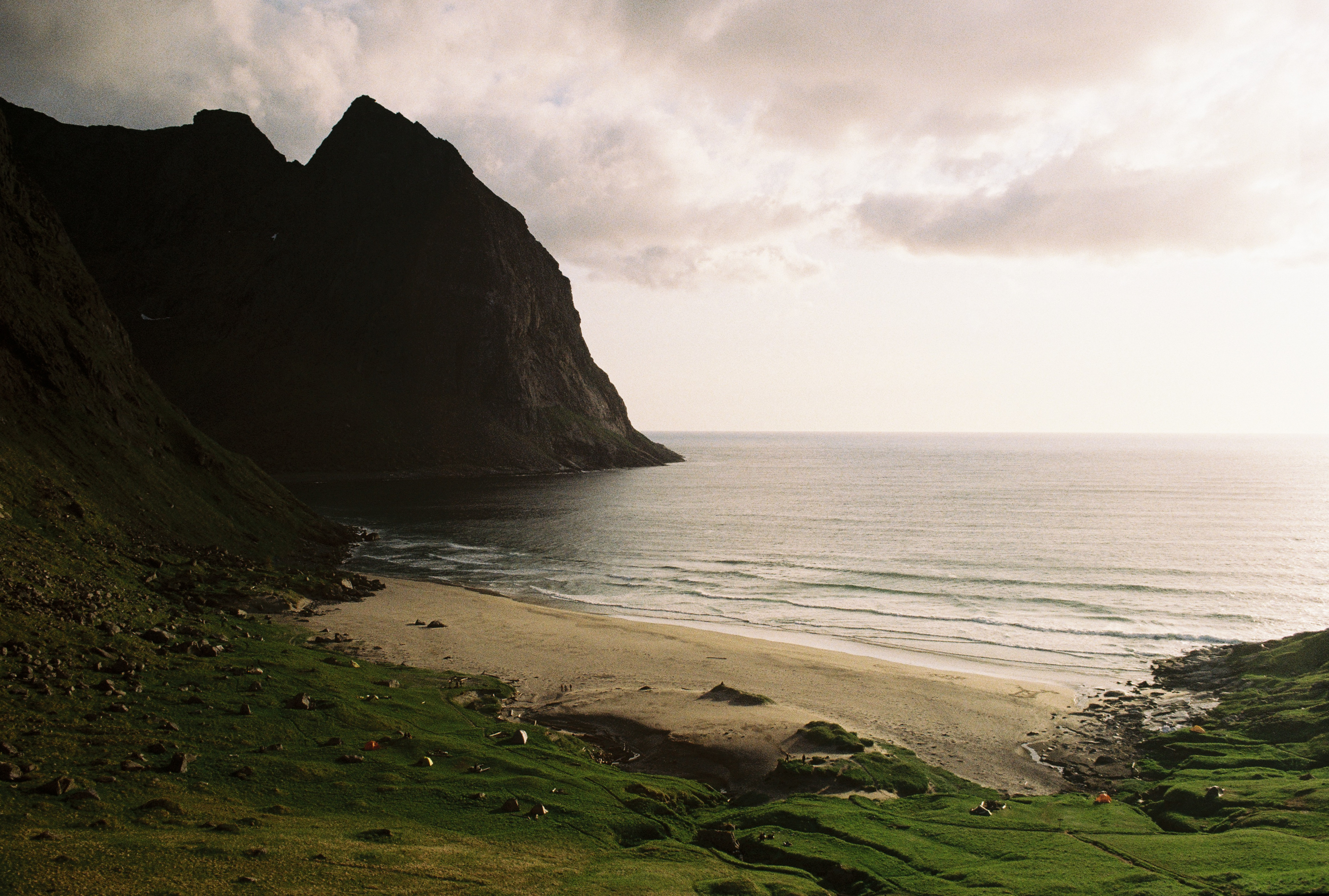
Sunset before camping at Kvalvika beach.
When the ferry finally pulled away, the world shifted again. The coast receded behind us, and the Lofoten Islands began to emerge through the mist — jagged peaks rising straight out of the sea, as if the earth itself had cracked open. The Arctic air was crisp, salted, and pure. Cameras came out, but even then, we knew that no photograph could capture what it felt like to simply be there.
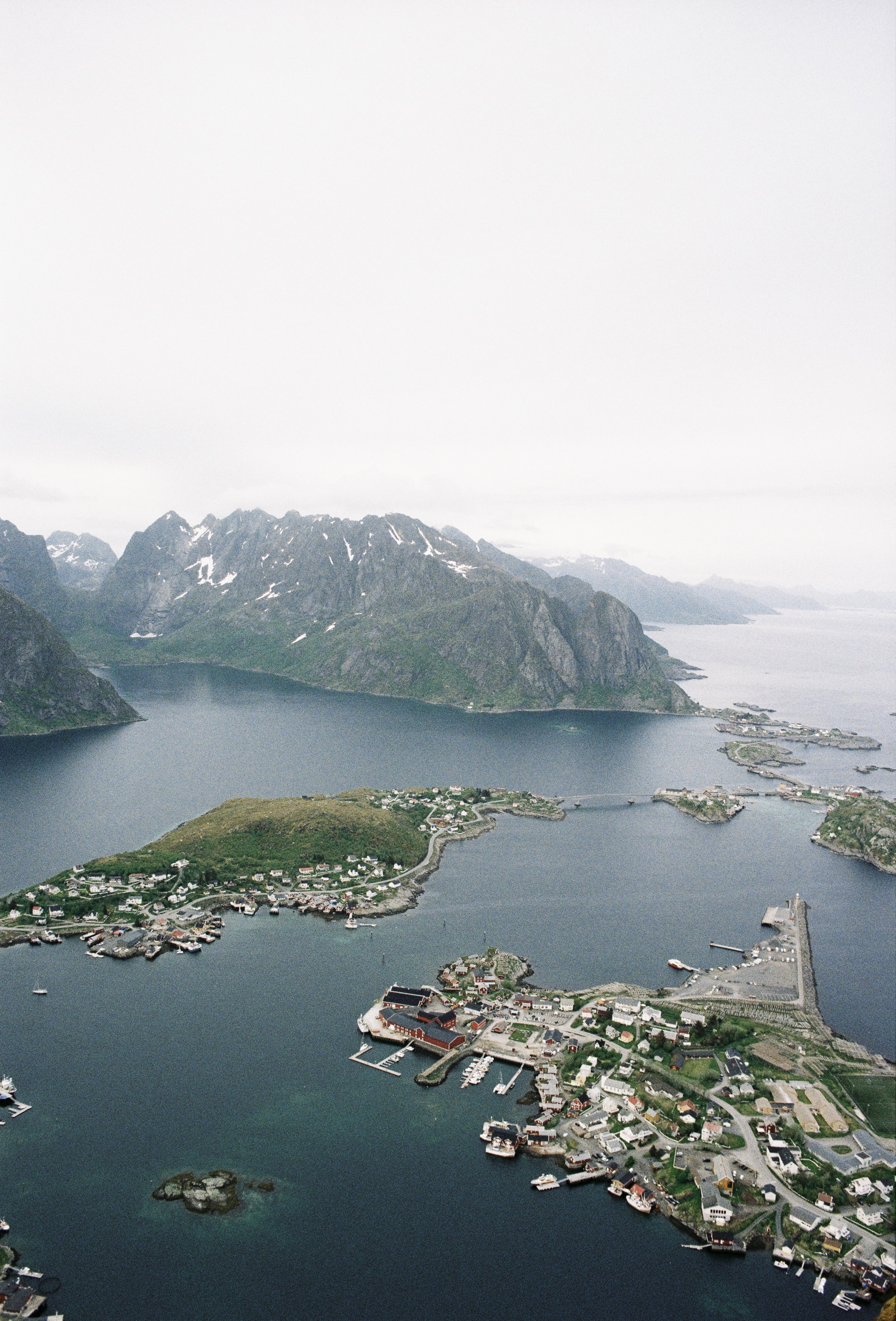
Reine seen from the heights of Reinebringen.
Landing in Moskenes felt like crossing into another world. Wooden cabins painted red stood along still harbors, mountains pierced the clouds, and the ocean stretched endlessly in every direction. Our first stop was Reine, a village so perfect it felt unreal — a place that makes you whisper without realizing why.

The stunning Kirkefjord, which can be seen from Reinebringen.
From there, the road wound north through the heart of Lofoten — from Å at the very edge of the islands, to Hamnøy, Nusfjord, Henningsvær, and Svolvær. Each turn brought a new scene: mountains plunging into turquoise fjords, golden beaches framed by snow, villages clinging to cliffs. We stopped constantly — sometimes to take photos, sometimes to just stand and breathe.
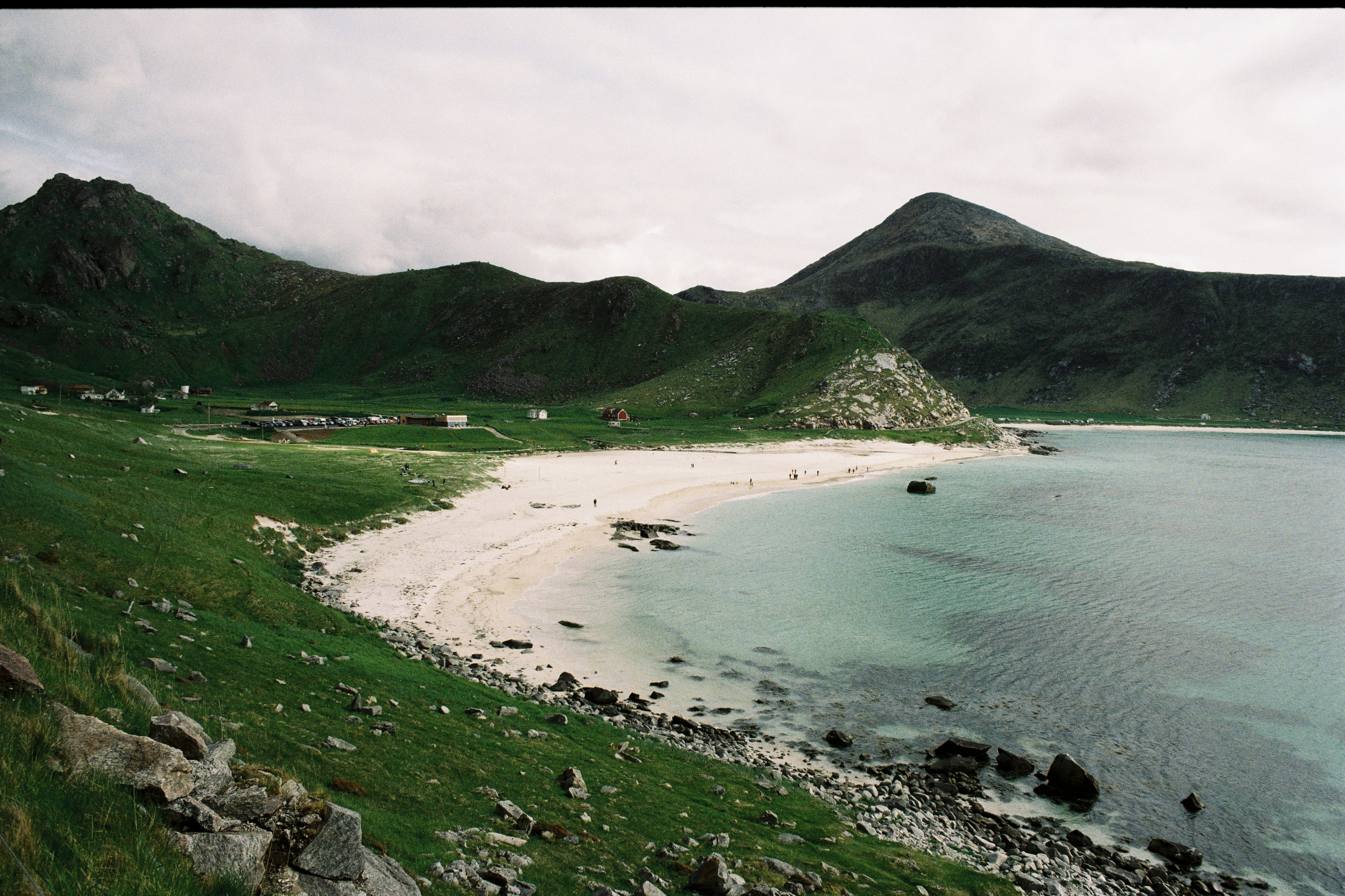
A morning walk starting at Haukland.
We camped wherever the land allowed it — on white-sand beaches like Kvalvika and Haukland, under skies that never went dark. We cooked by the sea, watched the light drift across the horizon, and learned how still the world can be when the only sound is the whisper of waves against the shore.
We hiked the steep trail to Reinebringen, each step rewarded by the sight of fjords spreading like glass below us. Standing on the summit, wind roaring and faces glowing with cold and wonder, we realized this was the kind of beauty that doesn’t ask for words — only presence.
At night, conversation slowed. Sometimes, we said nothing at all. The silence of the north has its own weight — soft but infinite. The kind that makes you feel both grounded and small. The kind you carry home.
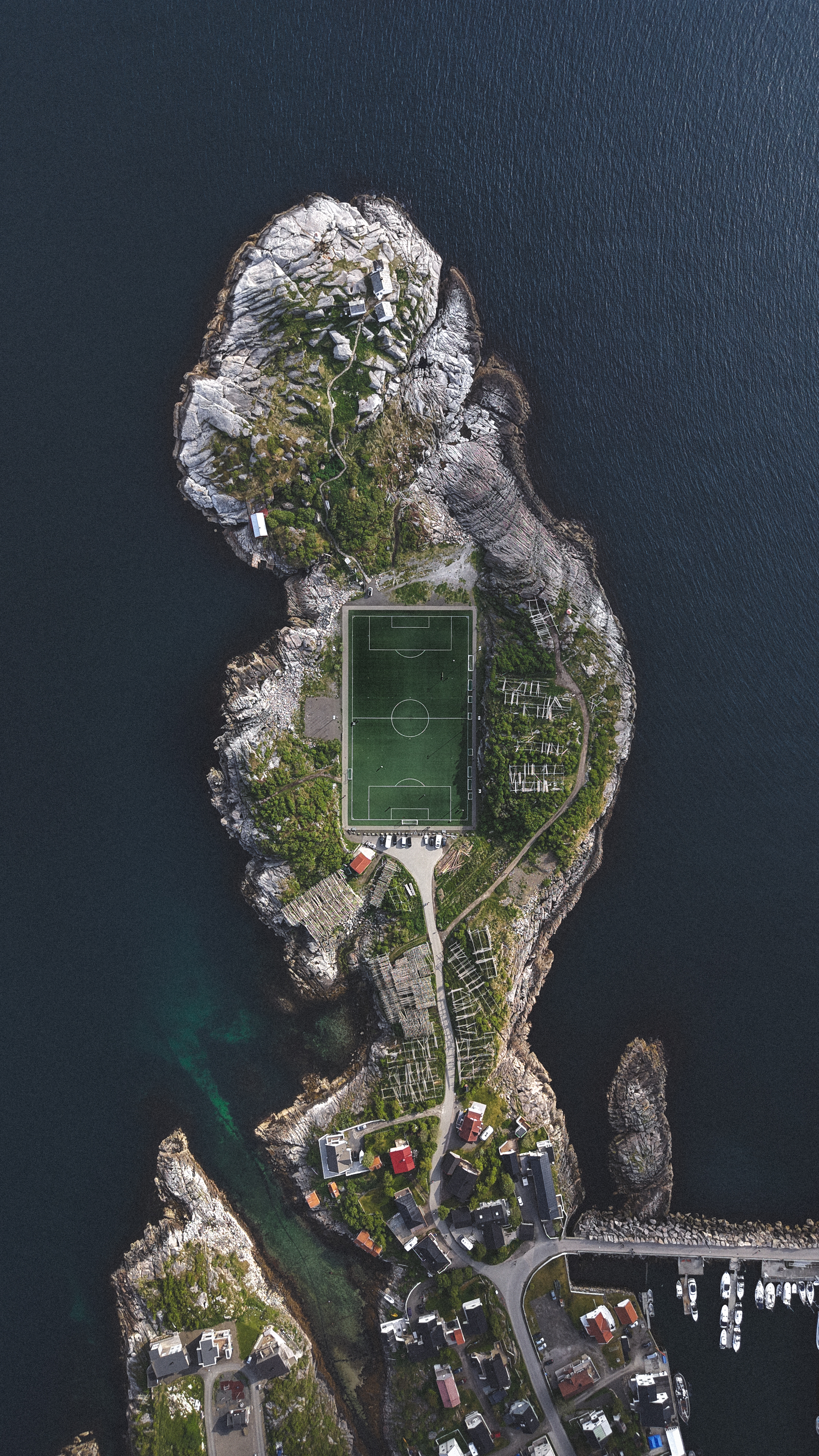
The most famous football field in Norway, Henningsvær stadion.
By the time we reached Tjeldbergting, our last hike of the trip, we had driven thousands of kilometers, crossed mountains, ferries, and countless cups of coffee. The car had become a second home — cluttered, messy, and full of stories. The laughter came easier now, quieter maybe, but deeper too.
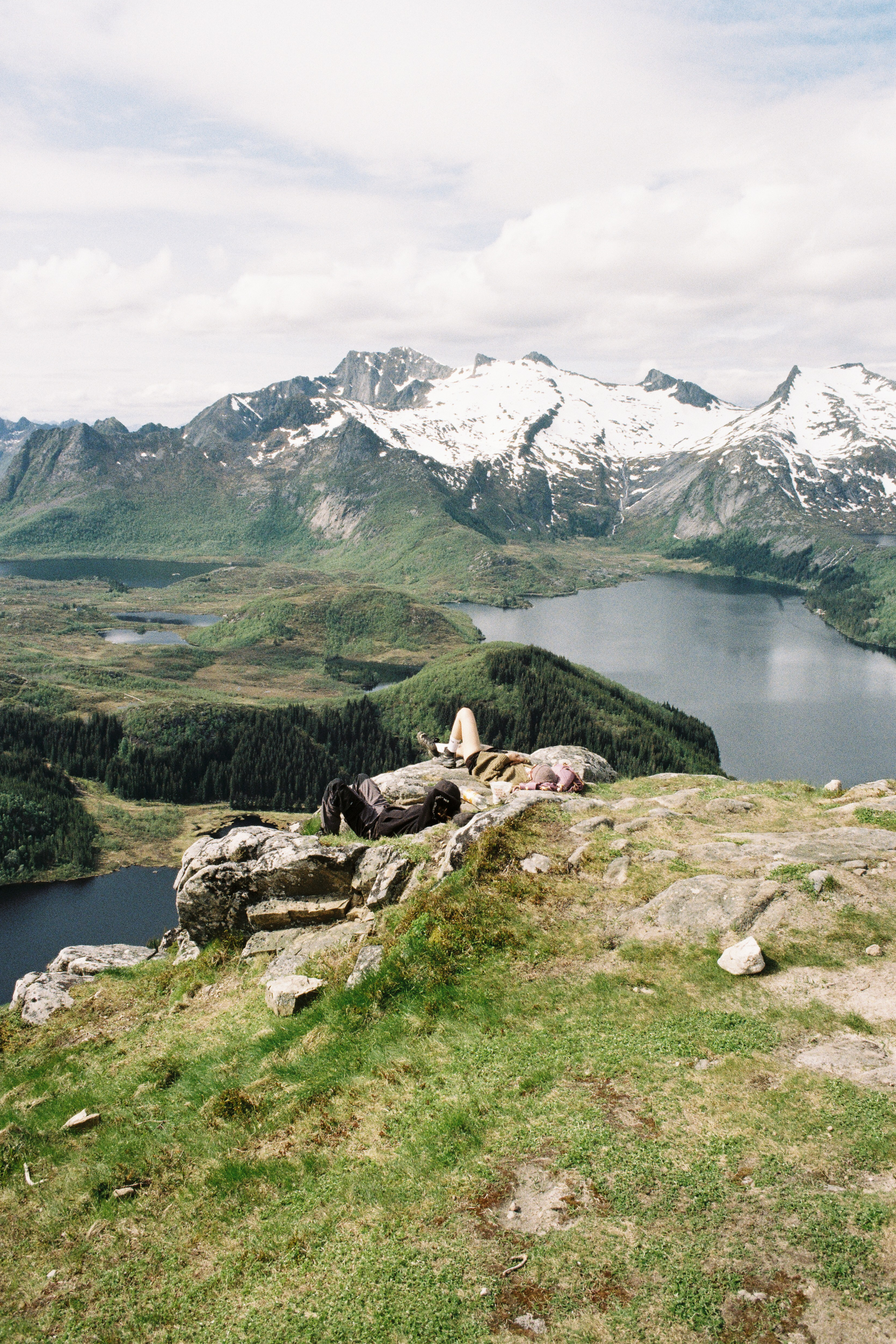
Last hike of the trip, Tjeldbergting.
When the time came to turn back toward Stockholm, the drive felt different. The adrenaline was gone, replaced by a calm sense of completion. The forests, the lakes, the light — everything looked both familiar and new. We had left something of ourselves in Lofoten, and carried a piece of it back with us.
In the end, it wasn’t just about reaching the Arctic Circle. It was about the road — the laughter echoing through valleys, the quiet awe of mountains meeting the sea, and the feeling of freedom that comes from not knowing exactly where you’ll sleep next.
Six friends, one car, endless daylight — and a journey that reminded us how vast, and how beautiful, the world can be when you just keep driving north.