Some trips don’t feel like they happen in time — they feel like they happen in color.
Ours began with a rented 4x4 and a horizon that seemed to move further away the more we drove. Namibia stretched before us like a mirage of stone and sand, a country drawn in the language of silence.
We left Windhoek under a hard blue sky, heading south toward Sossusvlei, the desert that photographers dream about and reality can barely match. The road unfurled endlessly — gravel dust rising behind us in golden plumes. Every stop was its own film still: a lone gas station, rusted signs, or an oryx motionless in the heat haze.
By the time we reached the Namib Desert, the light had turned orange, the world reduced to shadow and glow. We camped beneath stars so sharp they hurt to look at. At dawn, the dunes of Deadvlei came alive — red against white clay, black trees standing like frozen ghosts. Walking barefoot on that ancient sand, the only sound was the wind scraping across the ridges.
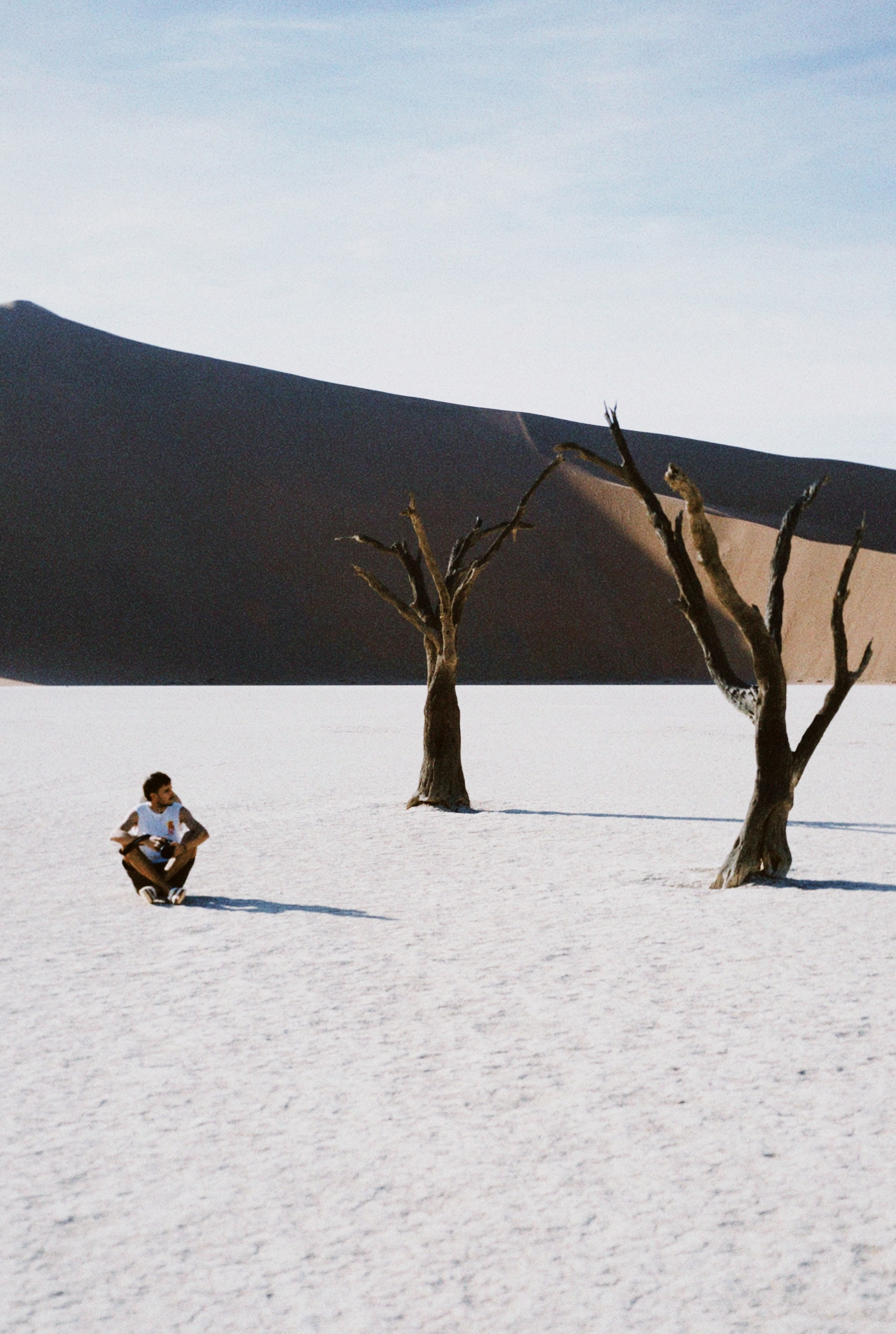
The red dunes of Sossusvlei and the dead trees of Deadvlei.
From there we drove north, the road narrowing into gravel ribbons that cut through nothingness. Spitzkoppe rose from the desert like a dream — granite peaks glowing pink at sunset. We climbed its flanks as the light slipped away, silhouettes scattered across the rocks. That night, we cooked pasta over a small fire, cameras pointed at the Milky Way spilling across the sky. Namibia doesn’t do small skies; it gives you the entire universe.
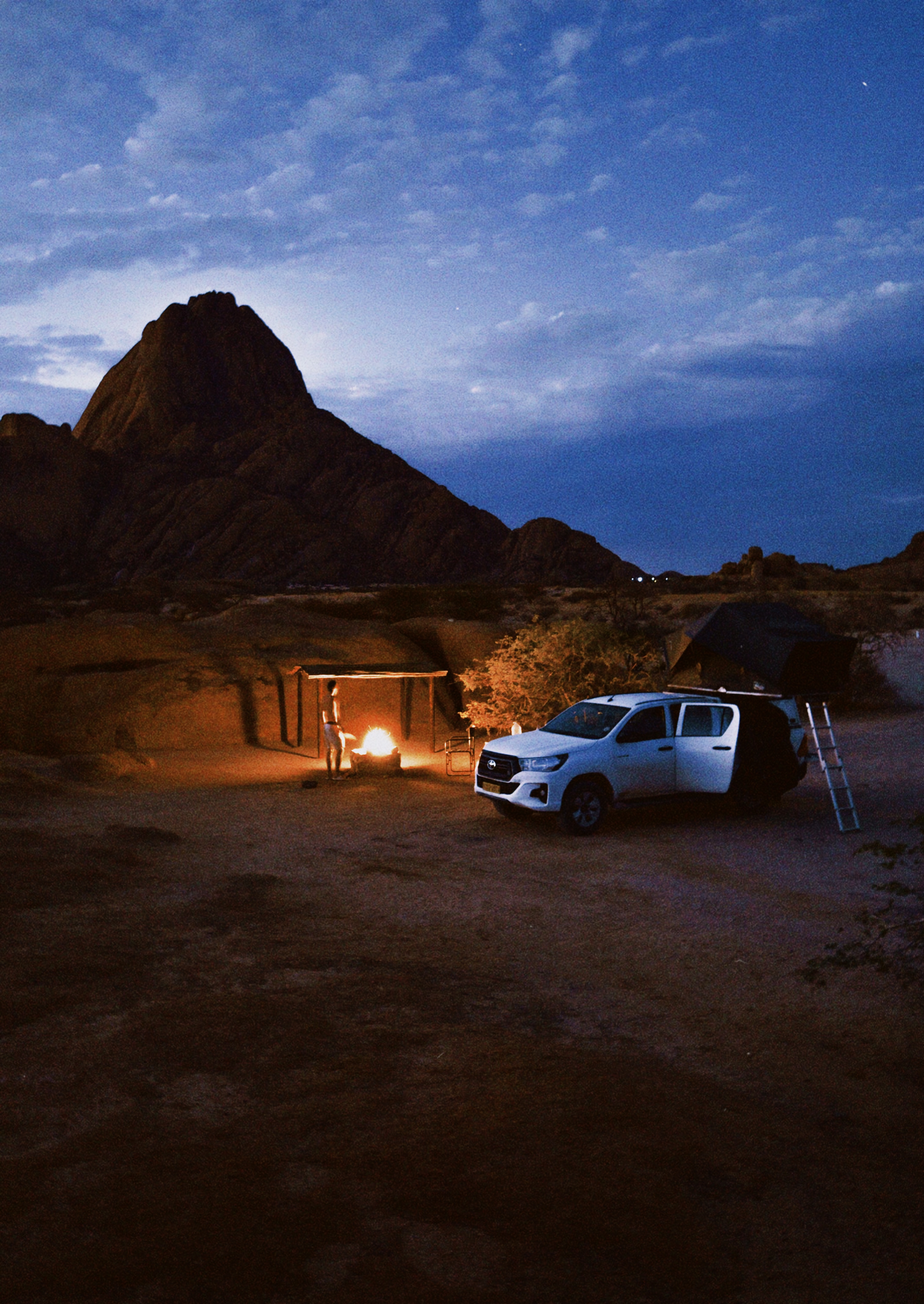
Spitzkoppe — an island of granite in a sea of sand.
The coast pulled us west. We reached Walvis Bay on a day when the Atlantic was covered in mist. The desert ended suddenly, as if the earth ran out of ideas — dunes sliding straight into grey water. We packed the Patrol with gear and fuel, deflated the tires, and aimed for Sandwich Harbour. The track vanished behind us almost as quickly as it appeared.
There’s no map for this place. The tide rewrites it daily. One wrong turn and you’re swallowed by sand or sea. The dunes moved like waves themselves, each one taller and steeper than the last. At the summit, the world opened — on one side, an infinite desert; on the other, an ocean that refused to end. The wind howled, the light changed by the second, and for a moment we felt like we were standing at the edge of the planet.
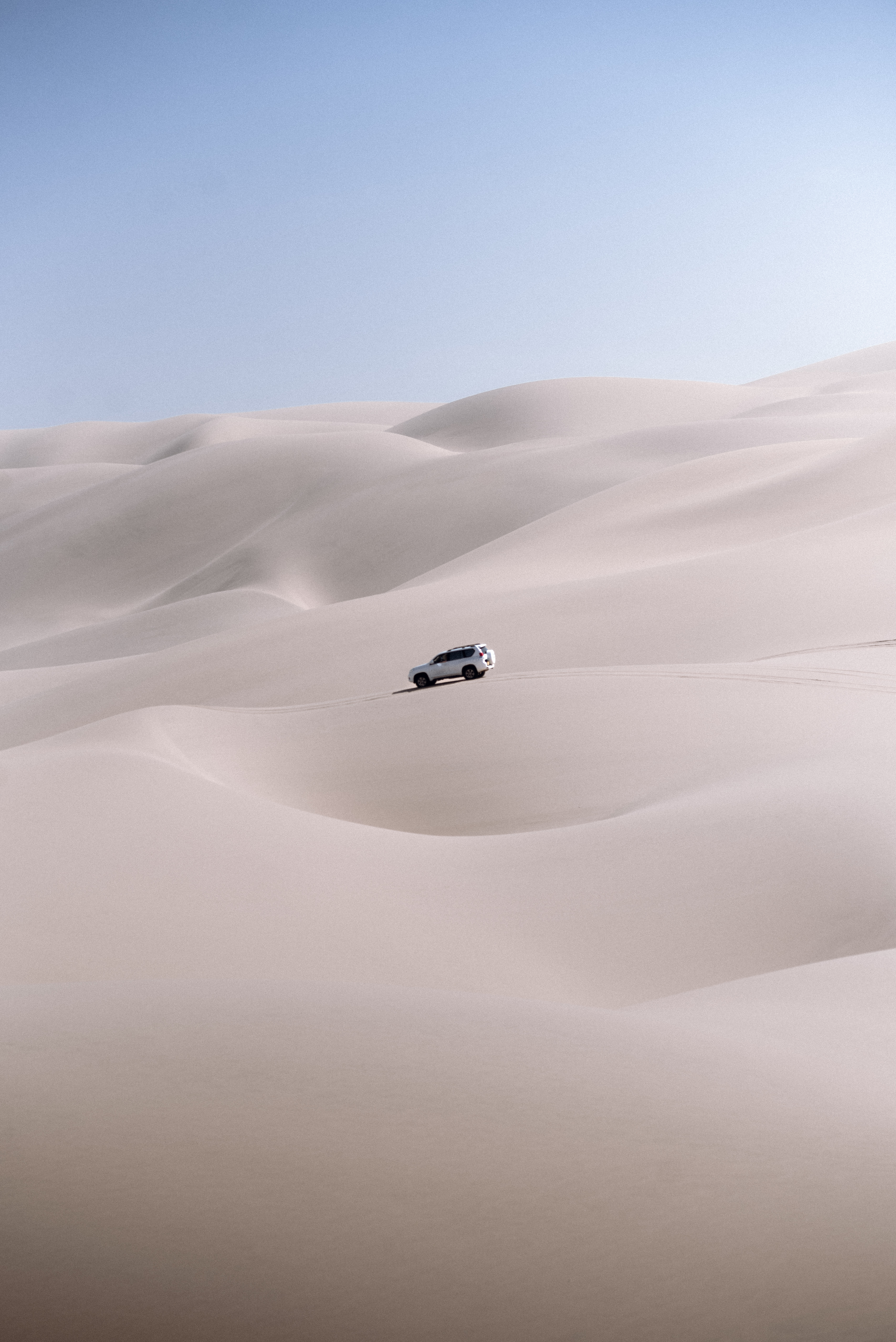
Where the dunes meet the Atlantic — the edge of the world.
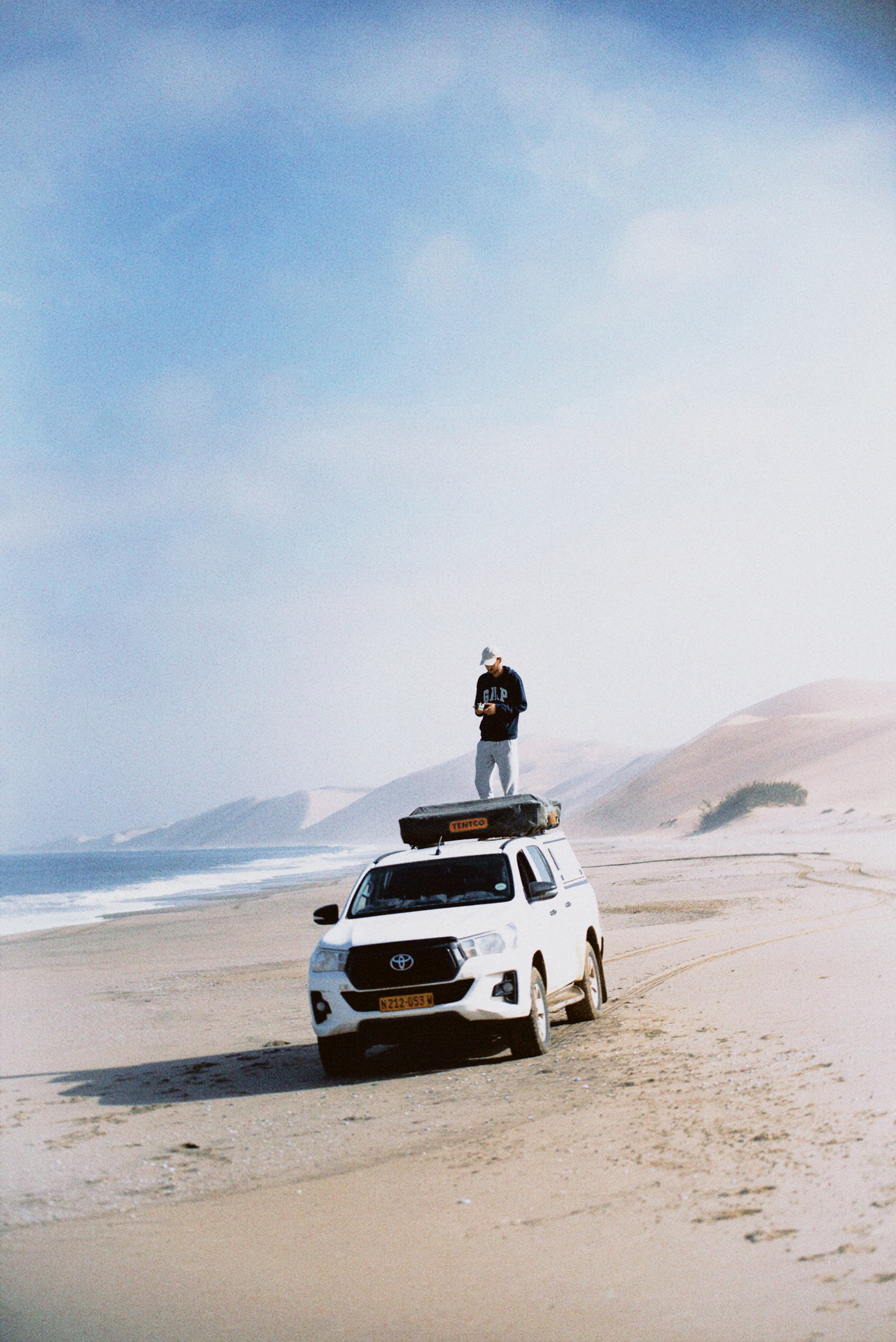
Driving through Sandwich Harbour during low tide.
We camped inland that night, building a fire between the dunes. The flames flickered against the sand, our laughter lost in the wind. It’s strange how the desert can feel empty and full at the same time — silent, yet alive with movement and memory.
The road north traced the Skeleton Coast, a place that wears its name like a warning. Shipwrecks lay half-buried in the fog, rusted hulls breaking through sand like bones through skin. The air smelled of salt and dust, and the ocean roared without pause. At times we drove for hours without seeing another soul — only jackals darting between dunes and the occasional bleached whale rib.
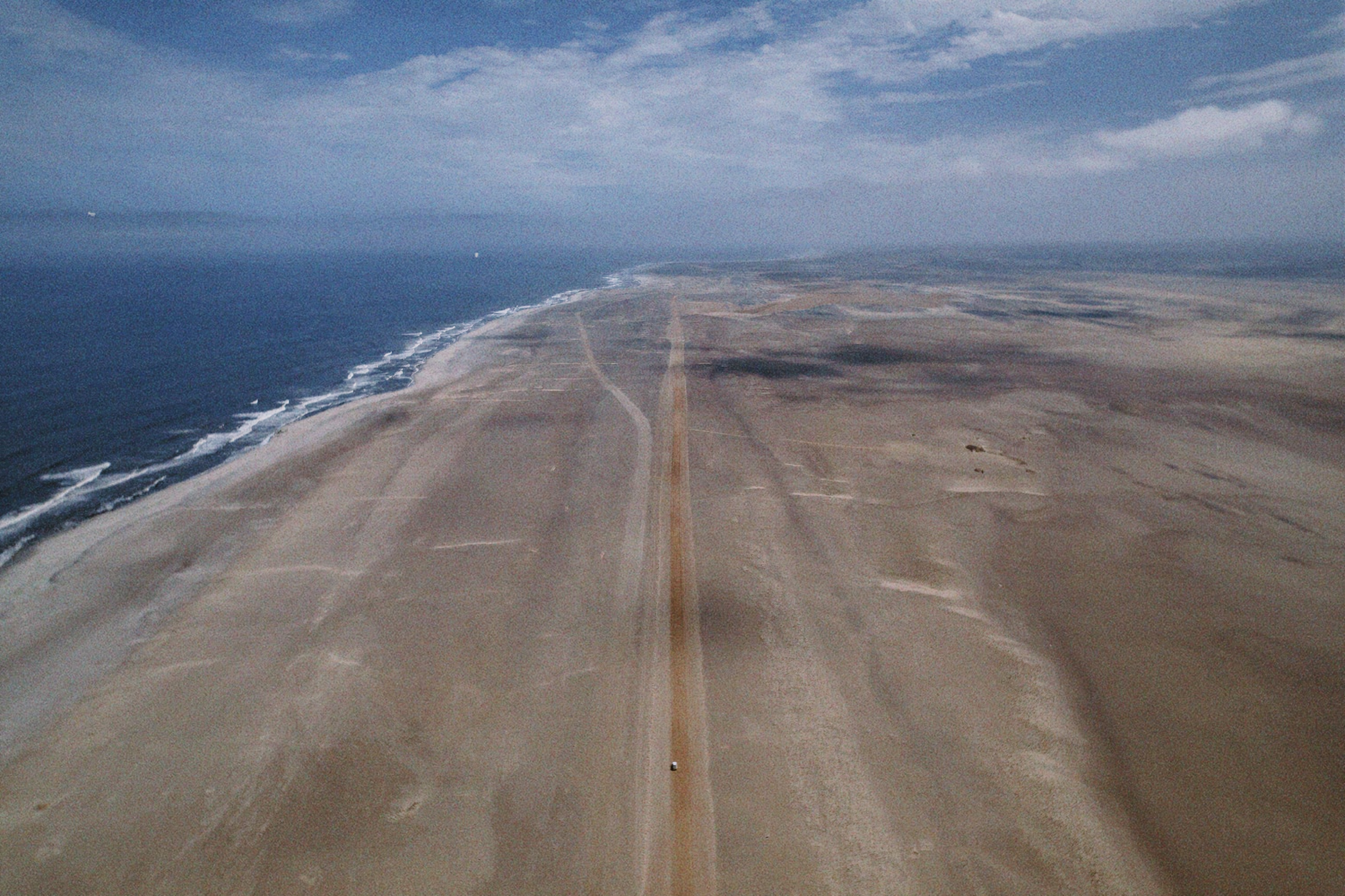
The Skeleton Coast — where ships go to die and silence reigns.
From the coast, we turned inland toward Damaraland, where the land grew wild again — mountains folded over each other, ochre and violet in the late light. Elephants crossed the dry riverbeds, ghosts of a quieter age. We drove with windows open, dust mixing with the scent of acacia and the faint metallic taste of the desert. Every stop felt like the middle of nowhere — and yet exactly where we wanted to be.
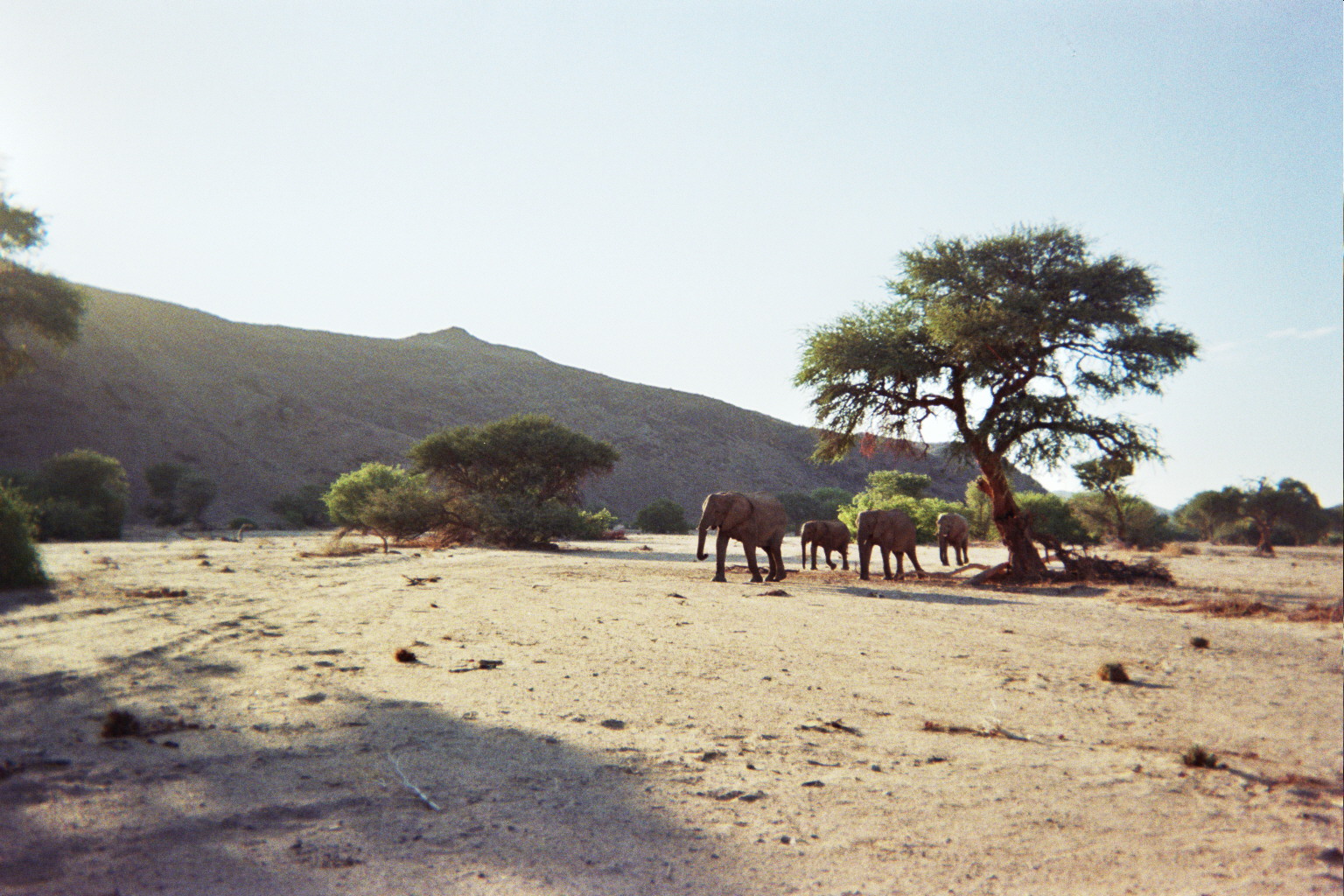
Damaraland landscape with desert-adapted elephants.
Our last destination was Etosha, a land of mirages and motion. The salt pan spread out like a white ocean, and animals gathered around waterholes in scenes that looked almost biblical. Giraffes moved like shadows across the horizon, springboks darted in bursts of light, and at night lions roared somewhere in the dark, close enough to feel but far enough to stay unreal.
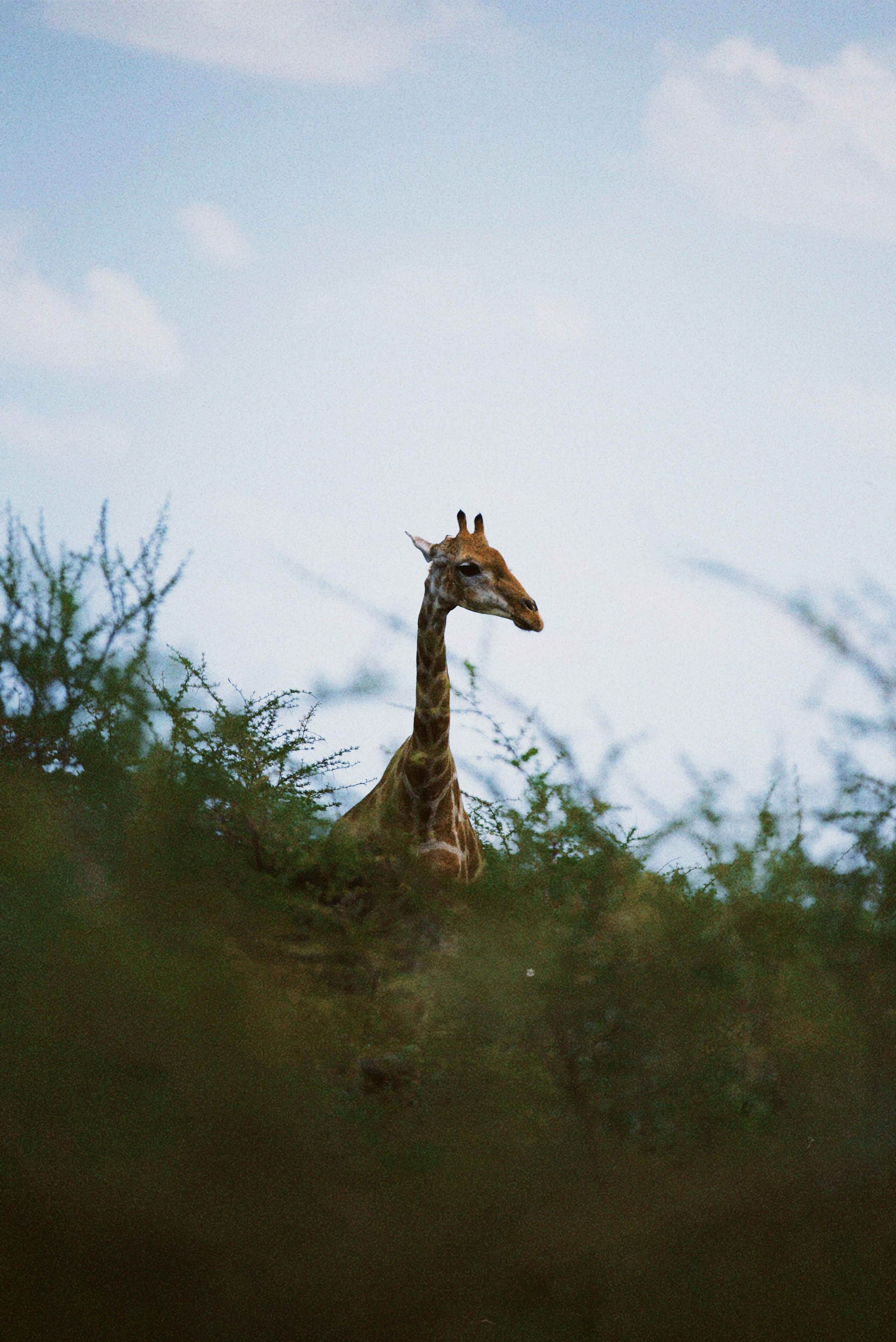
Etosha — the desert breathes, and everything moves in silence during the wet season.
By the time we looped back toward Windhoek, the Patrol was coated in red dust and our clothes smelled of fire and salt. The odometer had added thousands of kilometers, but it didn’t feel like distance — it felt like a rhythm, a pulse that connected each place to the next.
Namibia had revealed itself in fragments: a dune, a shadow, a track, a storm. Each moment impossible to hold, except in memory — or in photographs taken with trembling hands in the fading light.
From Sossusvlei to Sandwich Harbour, from Skeleton Coast to Etosha — Namibia is not a destination. It’s a feeling of vastness, a silence that humbles, a road that never quite ends.