The first light over Samarkand feels like waking up inside a story.
From the plane window, the land stretched in shades of sand and copper, until the blue domes began to rise — mosaics catching the sun like fragments of the sky itself. I arrived in the soft heat of morning, the air thick with dust, spice, and the hum of markets not yet awake.
The Registan stood ahead, silent and immense. Three madrasas — walls covered in patterns too precise to be human — glimmered as the city stirred. The air smelled of bread and petrol, and the sound of the muezzin echoed like a memory. I walked through the square in a daze, tracing tiles that had seen centuries pass and empires fall. Samarkand didn’t feel like a city. It felt like a heartbeat — old, steady, eternal.
At night, the domes glowed under floodlights, and the stones still held the warmth of the day. Tea vendors whispered, children ran barefoot across the square, and the stars appeared slowly, one by one, above the minarets. The Silk Road was no longer a legend — it was real, alive, breathing through every mosaic.
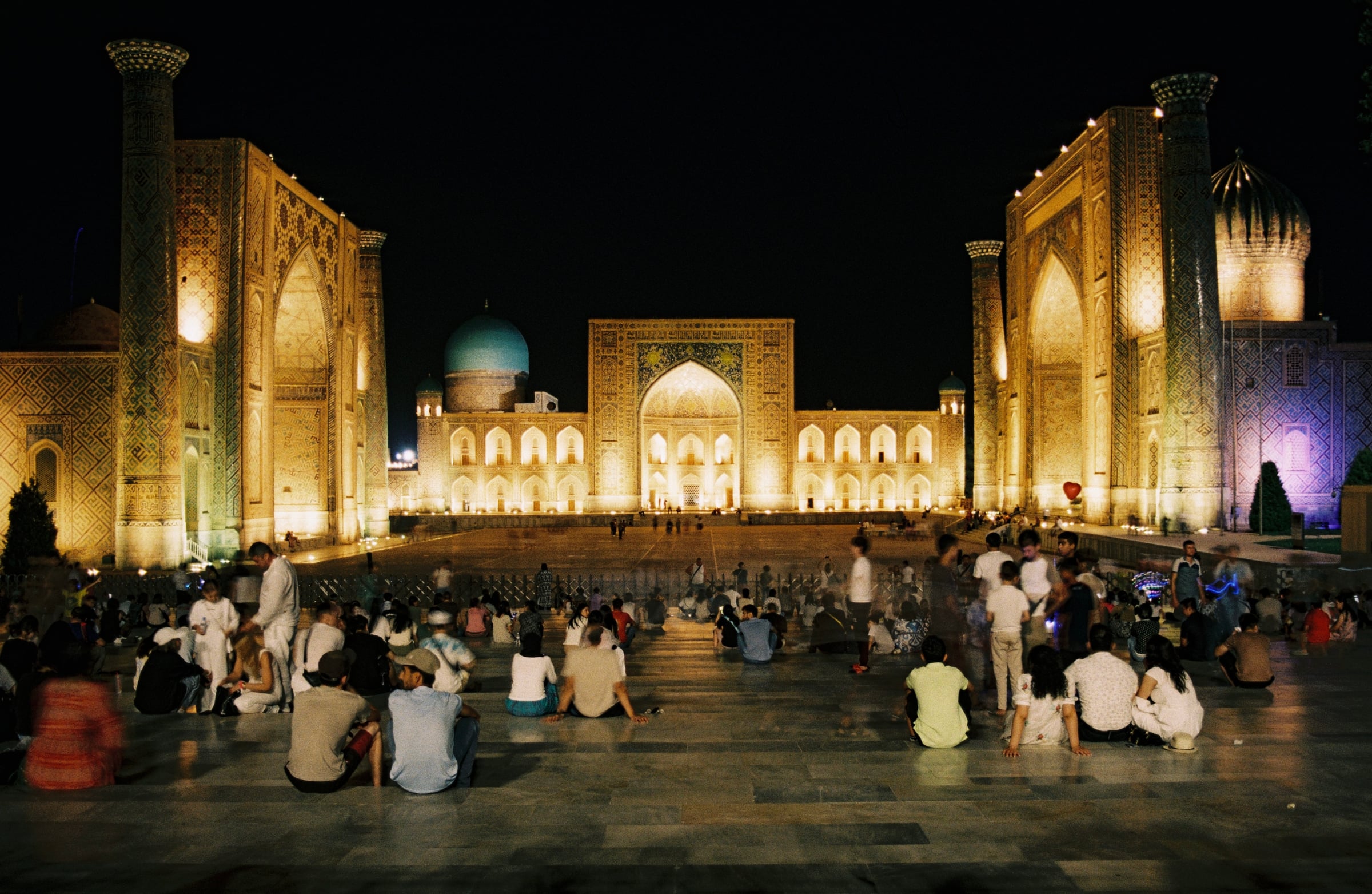
Samarkand — the blue heart of the Silk Road.
When the train to Tashkent left the next afternoon, the city dissolved into gold and green. The Afrosiyob hummed across plains where time seemed to blur — villages flashing by, children waving from the tracks, the endless horizon bending under the heat. Inside the carriage, everything was quiet and modern, but through the glass, the old road ran parallel — dirt paths where caravans once moved under the same sun.
Tashkent greeted me with wide boulevards and the clean geometry of Soviet planning. The city felt like two worlds — marble and mosaic, logic and soul. Underground, the Tashkent Metro unfolded like a hidden museum. Each station told its own story: domes of stained glass, chandeliers hanging like frozen rain, mosaics glinting under the fluorescent hum. You could travel the city without ever seeing daylight.
Outside, Chorsu Bazaar pulsed with color and scent — melons stacked in mountains, vendors shouting above the din, steam rising from kebabs sizzling on skewers. I drank tea that was poured before I could even ask for it and watched the city shift from daylight into neon.
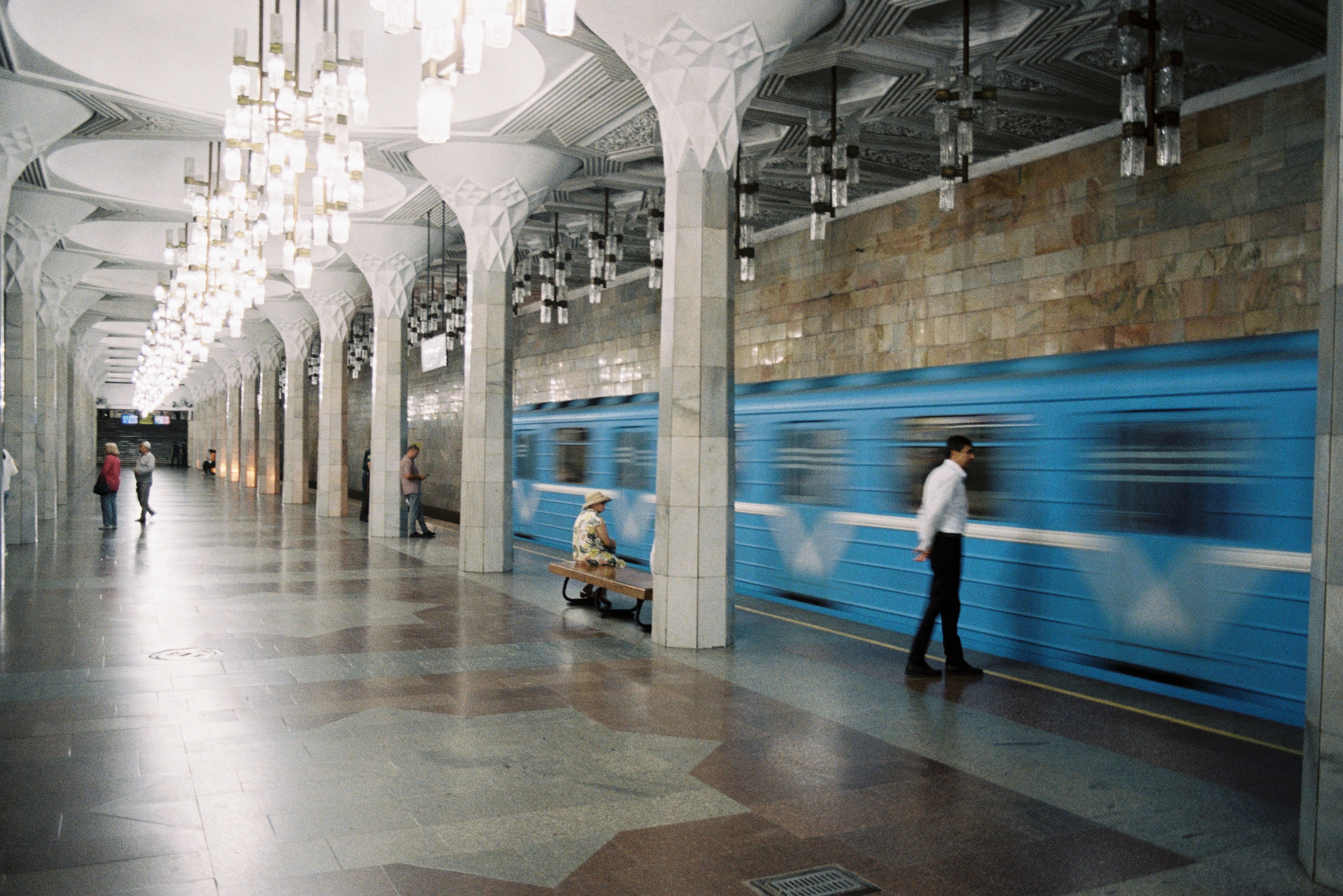
The Tashkent Metro — a Soviet dream of marble and light.
The road east carried me to the Fergana Valley, where the land turned green and generous again. Kokand appeared like a mirage — quiet, warm, with the Khudayar Khan Palace still standing in bright defiance of time. Inside, painted ceilings bloomed in turquoise and gold, echoing the patterns of Samarkand but softened by age.
Further on, in Margilan, I found the heartbeat of the Silk Road — silk itself. In sunlit courtyards, women stirred vats of dye while threads dried in slow waves of color. The air smelled of wood smoke and hot fabric. One old craftsman let me hold a half-finished scarf between my fingers — it shimmered like water. “It takes a month to weave,” he said. “Beauty takes patience.” That night, I watched the valley fade beneath the plane’s wings, the lights of Fergana scattered like stars.
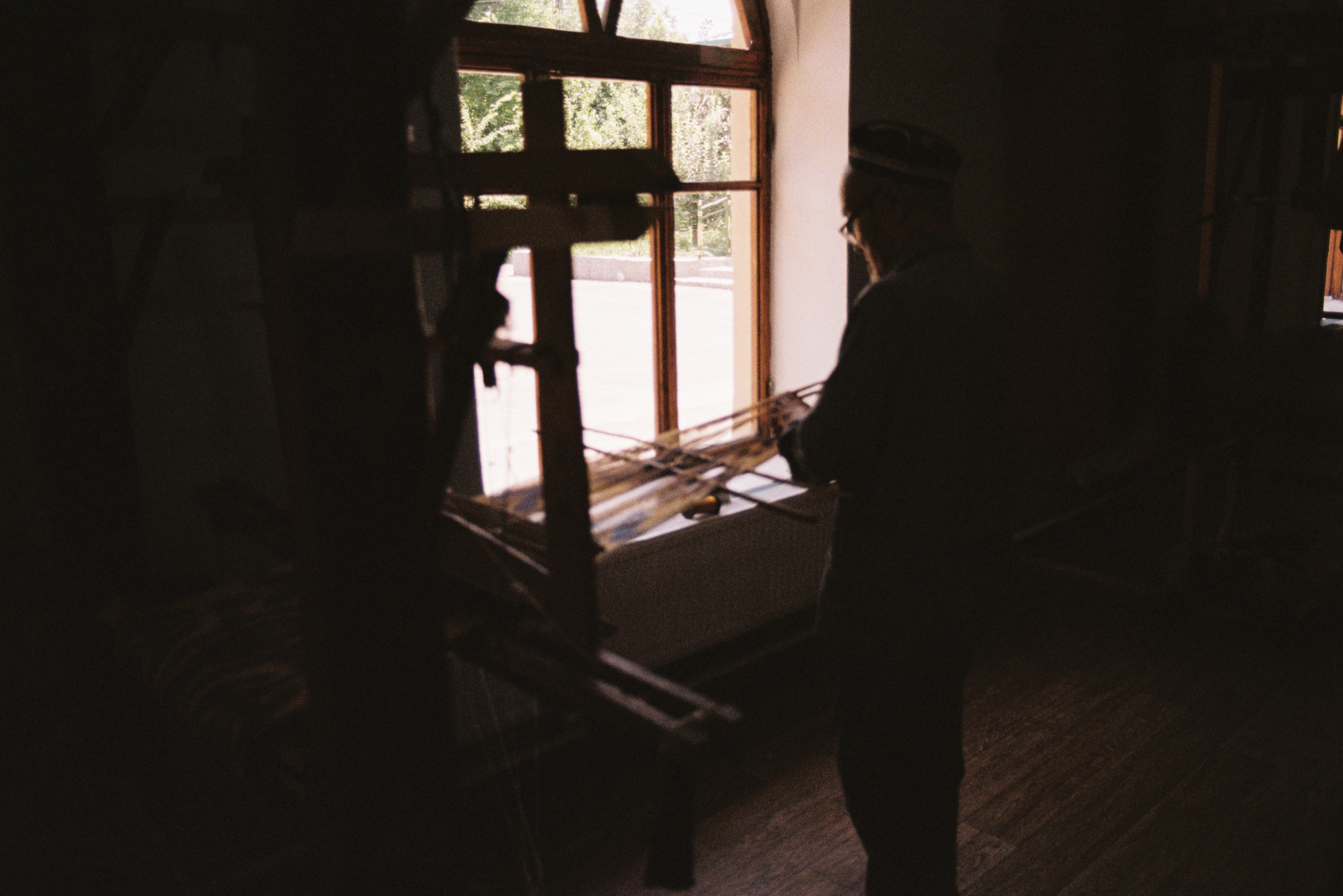
Margilan — where silk still breathes the memory of caravans.
Then came the long train west, fifteen hours of steel and heat. The carriage was Soviet, worn, its fans slow and stubborn. The air was heavy, alive with the scent of metal and dust. We shared sunflower seeds and stories with the family across the aisle. A boy offered me tea in a cracked glass, his father humming old Uzbek songs under his breath. Outside, the moonlight rolled across the plains — silver dunes, ghostly villages, the kind of emptiness that makes you quiet.
By dawn, Khiva rose from the desert like a mirage. Clay walls, turquoise minarets, shadows of camels in the distance. Inside the old city, time folded in on itself. Itchan Kala was still — sand-colored alleys, carved wooden doors, the smell of bread baking in tandoors. I climbed to the top of a madrasa at sunset and watched the light burn gold against the towers. For a moment, it felt like the world had stopped turning.
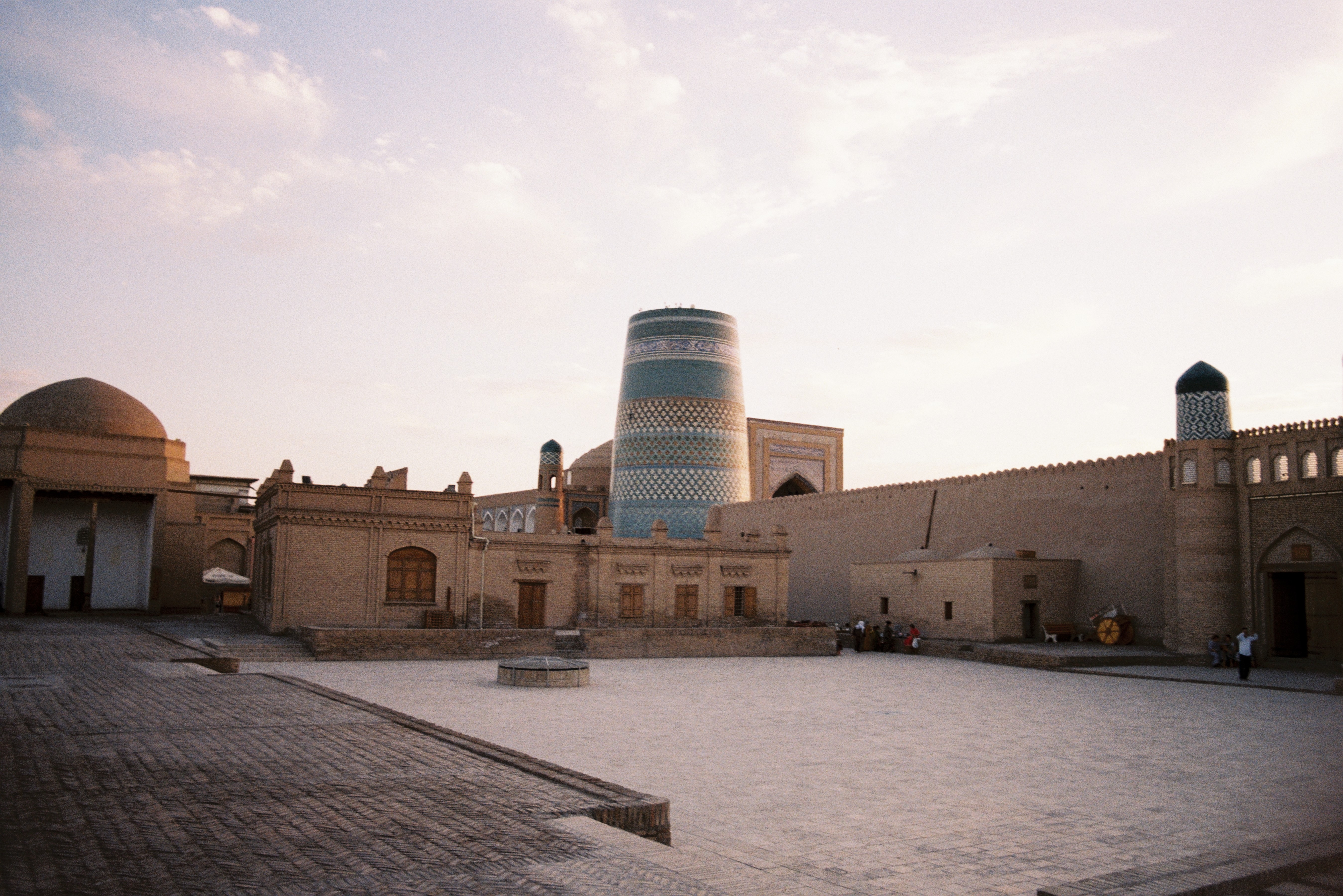
Khiva — a desert mirage that outlasted empires.
The road to Bukhara cut through the Kyzylkum Desert, an ocean of silence. Heat shimmered on the horizon. Occasionally, a camel stood motionless by the tracks, watching the train pass. When the city appeared, it felt like an oasis of memory.
In Bukhara, everything slowed down. The Po-i-Kalyan Minaret towered above it all, a sentinel from another age. Around Lyabi-Hauz, people gathered at sunset — drinking tea, laughing, feeding the birds. The water reflected the sky, and the air smelled of dust and fruit. I met a craftsman who sold knives patterned like rivers. “Everything beautiful takes time,” he told me, and I thought of the silk, the mosaics, the long train rides — the rhythm of patience that runs through this land.

Bukhara — where time moves to the rhythm of tea and prayer.
The last stretch led me back to Samarkand, where it had all begun. Returning felt like stepping into the same dream, but from the other side. The light was softer, the streets quieter. I visited the same teahouse, bought a small ceramic bowl painted with blue swirls, and shared one final pot of tea with the friends I’d made along the way.
When the plane lifted off the next morning, the plains below glowed with the first light of day. The roads, the rails, the rivers — all seemed to connect, a network of stories and dust stretching endlessly east and west. The Silk Road wasn’t a route; it was a rhythm — one that still hums through Uzbekistan, through the call to prayer, through the clatter of trains, through every shared glass of tea.
Fourteen days through the heart of Central Asia — not just across a country, but through centuries of trade, patience, and wonder, in a land where time travels slowly, beautifully, and never in a straight line.